Recognizing Early Warning Signals in Critical Infrastructure
A comprehensive field service inspection is a predictive measure designed to prevent catastrophic failures in industrial piping systems. Understanding when to initiate an inspection is crucial for maintaining operational integrity. Facility managers and maintenance personnel frequently observe key indicators, such as damaged components (e.g., a broken spring), deviations in system alignment (e.g., pipe sagging), and other critical issues that can turn up in surrounding components and equipment (e.g., rotating equipment balance problems). Proactive assessment during planned shutdowns or in response to unexpected observations ensures the longevity and safety of high-pressure, high-temperature environments.
How do you know it’s time to call the experts? Piping and support systems are designed to operate reliably for decades, but constant temperature cycling, vibration, and external elements can cause problems. Catching these issues early is the difference between a planned repair and a much more expensive emergency shutdown.
Here are five critical signs that signal you need to schedule a professional field service inspection:
1. Discovery of a Broken Rod on a Spring Can
A spring can—or variable/constant effort spring hanger—is designed to manage the vertical movement of piping while providing support. When a spring rod is found broken, it signifies a total, localized failure of that support. This means the entire load previously carried by the spring is now being transferred to adjacent supports or, worse, directly onto equipment or vulnerable pipe sections.
A broken rod is an unmistakable sign that your pipe stress limits have been exceeded, requiring immediate assessment of the entire line for secondary damage.
2. Noticing Line Sagging or Piping Misalignment
Line sagging issues occur when the pipe deviates noticeably from its intended path or slope. This is a common trigger for our customers and often indicates that fixed supports (such as anchors or guides) have failed, or that variable supports (such as spring cans) are underperforming or frozen.
Piping misalignment is not just an aesthetic issue; it creates unanticipated stress points, restricts thermal movement, and can lead to water hammer or flow restriction. An inspection is necessary to diagnose the root cause and recalibrate or replace the failed components.
3. Facing Rotating Equipment Balance Problems
While rotating equipment (pumps, compressors, turbines) has its own maintenance schedule, recurring balance or vibration problems can often be traced back to the attached piping. When a piping support system fails, the resulting stress or weight shift can pull the pipe connected to the equipment’s nozzle.
This imposed stress can distort the equipment casing, leading to shaft misalignment, excessive vibration, and premature bearing failure. If you have recurring equipment issues despite regular maintenance, an inspection of the connected piping supports is essential.
4. Visible Red Flags: Rust, Corrosion, and Missing Components
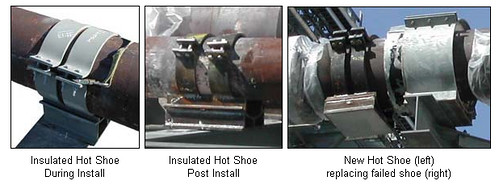
A visual inspection by your in-house team may reveal critical but straightforward issues. Look for heavy rust, pitting, or corrosion on support components, especially where they interface with the pipe (contact points). Additionally, missing nuts, bolts, U-bolts, clamps, or even entire sway struts are serious concerns.
These signs of external degradation compromise the load-bearing capacity and movement functionality of the supports. A professional inspection will quantify the damage and recommend precise component replacements.
5. Experiencing Unusual Noise or Sudden Vibration
Any sudden or unexplained change in the operational characteristics of a piping system should prompt an immediate investigation. This includes:
- Clanking or Knocking: Often indicates that pipe guides have failed and the pipe is impacting structural steel or adjacent lines.
- Squealing or Grinding: May be a sign that a support or slide plate is frozen, preventing the pipe from moving freely as temperatures change, causing friction.
- Excessive Vibrations: Can signify loose components or the propagation of a structural issue through the piping system.
Discovery of issues often happens during planned shutdowns or unexpected failures. If you notice any of these signs, our team offers specialized inspection services to assess the condition of your spring hangers and piping supports.
Expert Technicians, Real Solutions, and On-Site Support with Piping Technology’s Field Services Team
For facility managers, maintenance engineers, and plant operators who need to ensure the maximum reliability and safety of their critical piping systems, Piping Technology and Products (PT&P) provides rapid-response field inspection services. Unlike general contractors, our specialized experts diagnose hidden stress, misalignment, and potential component failures across your entire support system, leveraging 50 years of engineering experience to identify problems and provide custom-engineered solutions that minimize downtime and prevent catastrophic events.
Schedule Your Assessment with Our Field Services Team
Don’t let a minor problem turn into a major shutdown. Address these critical warning signs immediately.
Contact our Field Services team today to schedule your system assessment and secure your operations.
Read More
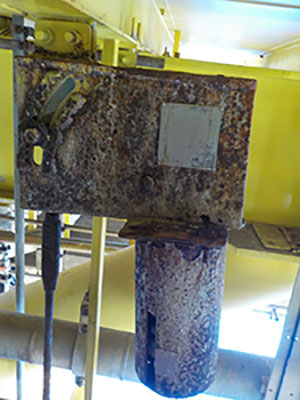
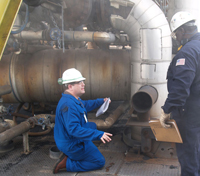 In this Webinar we explore the details of actual case studies focusing on various signs that indicate if a particular support needs replaced or adjusted. The presentation also covers projects that brought on new standard designs and custom designs for specific applications. And lastly, it includes valuable additions and procedures that extend the typical life span of a pipe support. PT&P’s field service division is available 24×7 in the case of an emergency situation or for a scheduled shut down.
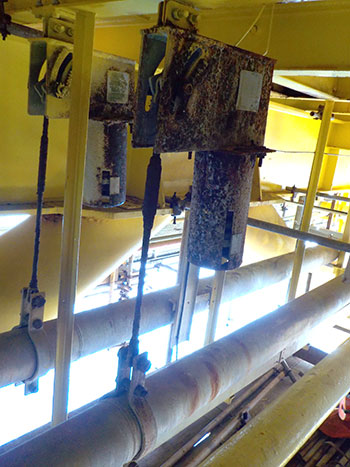
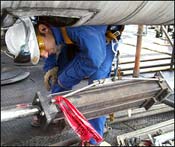 This Webinar will focus on installation and maintenance guidelines and offer valuable tips on inspecting a wide variety of pipe supports and expansion joints in your piping system. We will cover various pipe support applications and point out signs that indicate if a particular support needs replaced or adjusted. Obtain the knowledge you need to avoid the possibility of a potentially catastrophic situation. View examples of real world problems and see how we were able to solve them with timely and cost effective solutions.