Search 


 Constant Spring Hanger

Load & Travel Tables
 
Diagrams & Dimensions
  Fig. PTP-100:
A, B, C, D
E, F, G, U
  Fig. PTP-200:
A, B, C, D
E, F, U

 Catalog Request 

Fill out the request form to get your copy today!

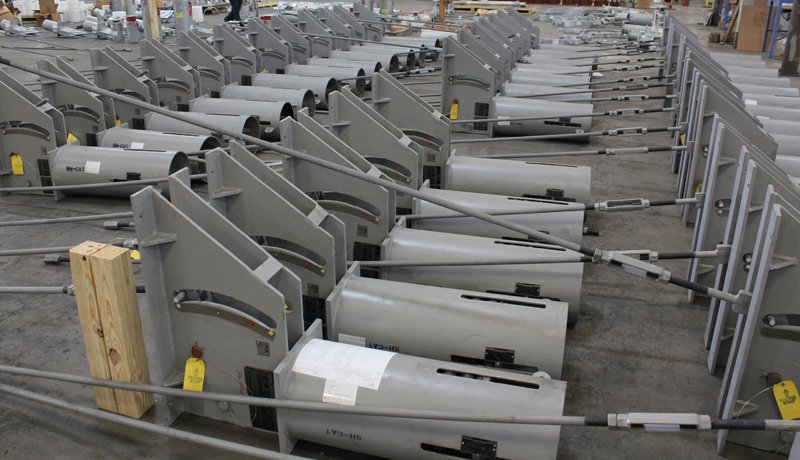
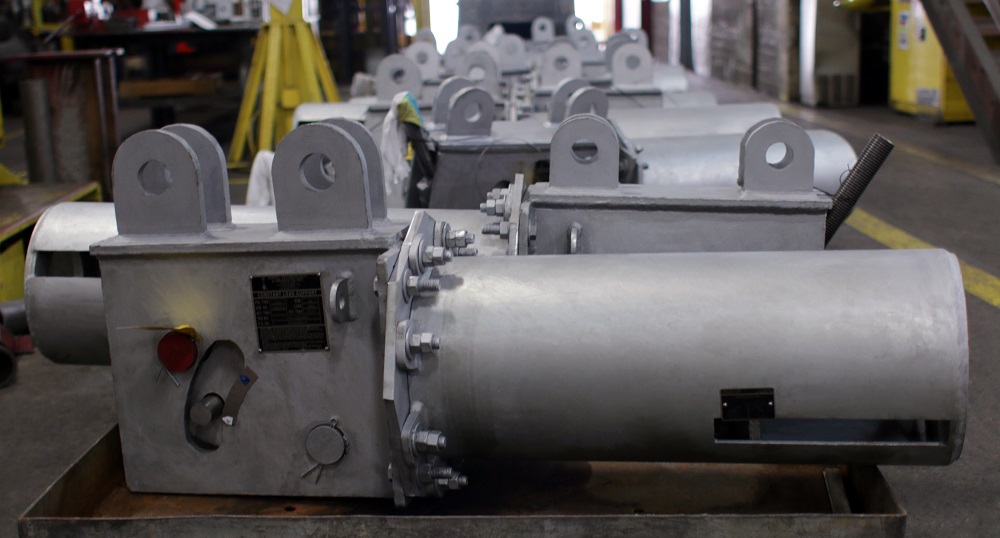
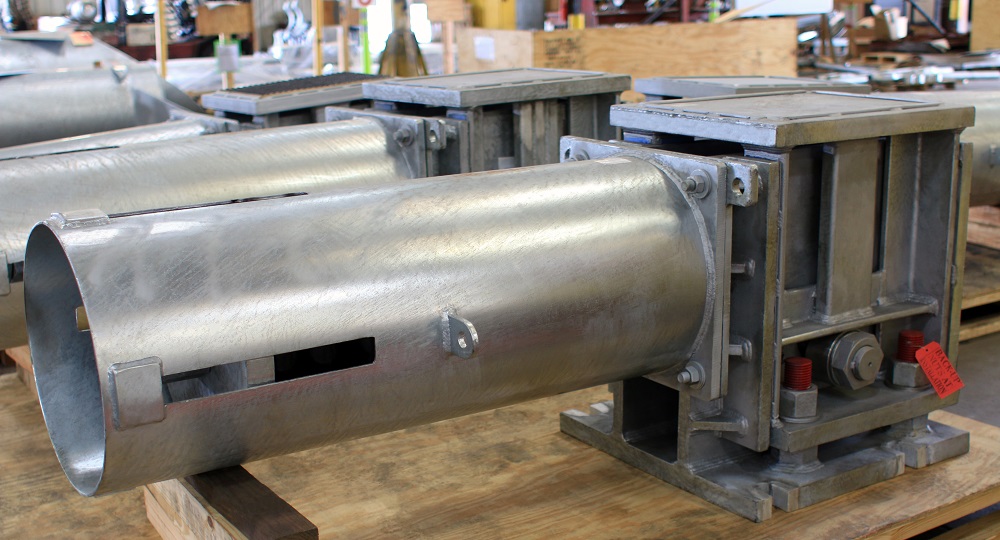
Engineered Spring Supports - Constant Spring Hangers


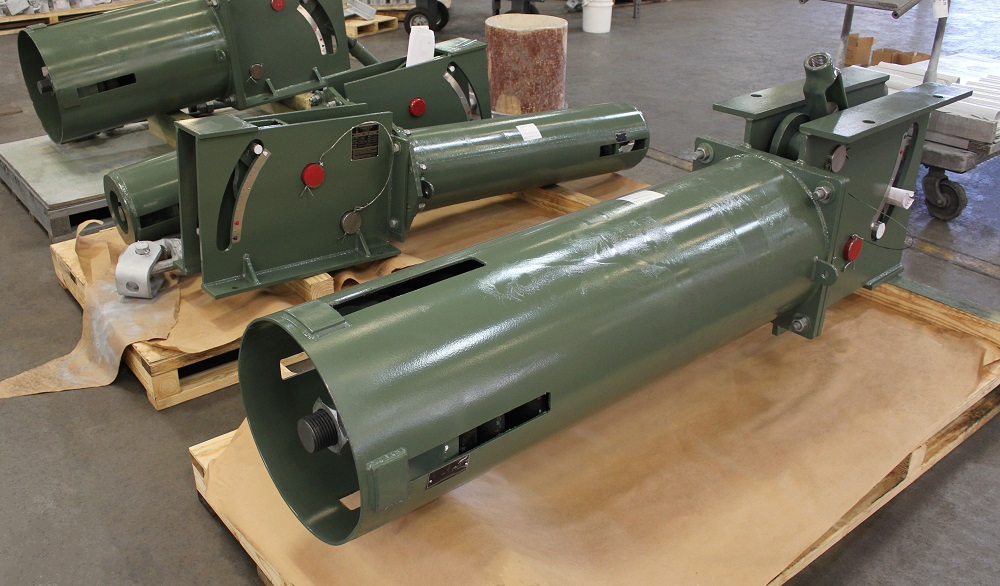
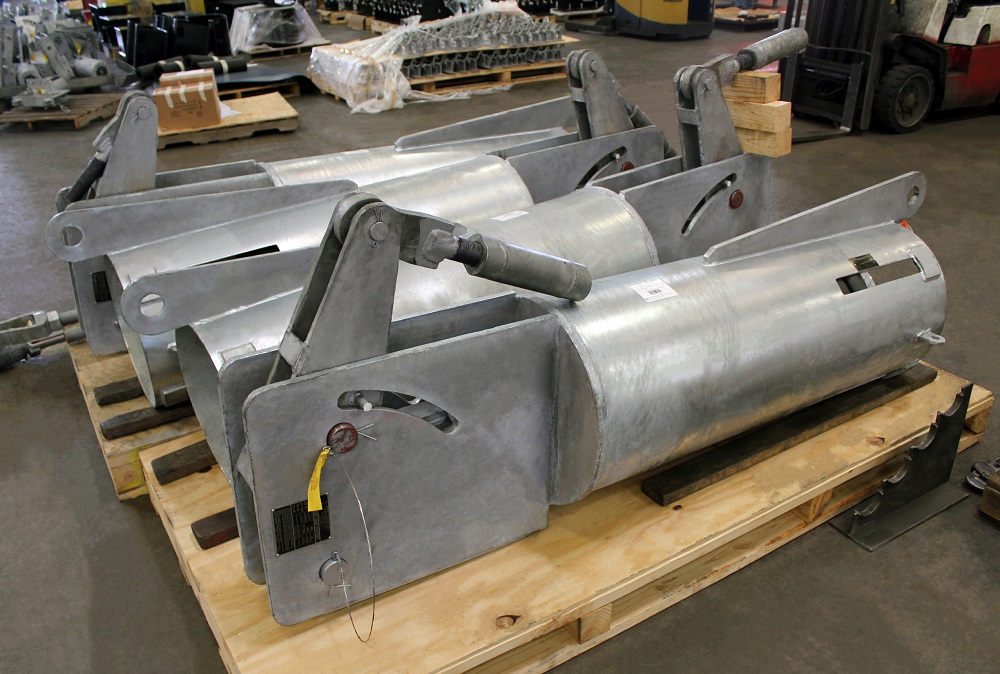
Piping Technology & Products' constant support hangers are principally used to support pipes and equipment subjected to vertical movement due to thermal expansion at locations where transfer of stress to other supports or equipment can be critical. The maximum recommended variation according to MSS standard from the operating load is 25% for variable spring hangers. If the variation exceeds 25%, a constant support hanger should be used.

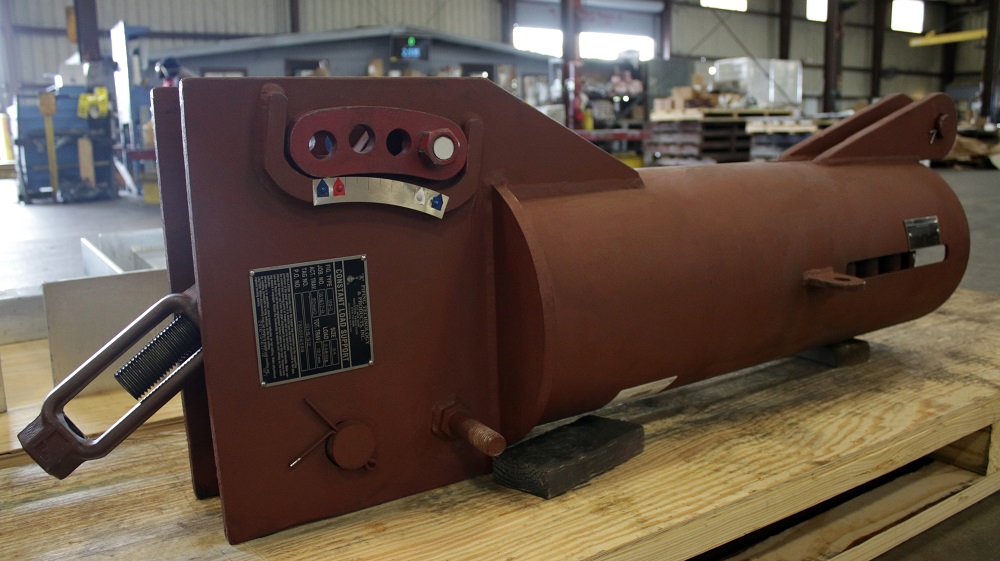
The constant resistance to a load is achieved by combining a spring coil with a cam which rotates about a main pivot point. The cam is designed such that the distances from the main pivot changes to compensate for the variable resistance during compression of the coil. The MSS standard provides for a tolerance of 6% in the constant load through the travel range. Our constant support hangers are designed per MSS, ANSI, and ASME standards.

Sizing Constants

The sizing of constants primarily depends on the total travel and load.

Total Travel

This is the vertical travel rounded up to the nearest ½, inch which includes the over travel and actual travel. The over travel is added to the actual travel to allow for discrepancy between the calculated and actual travel. The amount of over travel is determined by the method outlined below:

a) For actual travel less than 5 inches, the over travel is 1 inch.

b) For actual travel of 5 inches and over, the over travel is 20% of the actual travel.

Load

This is the operating load of the equipment which the constant is to support.

Having the total travel and load, the constants are sized per the constant load table. For a given total travel on the top row of the constant load table, select the operating load on the high side under the column. Then move across to the first column to determine the size of the constant support. The following examples will illustrate the procedure.

Example 1: Load = 2,400 LB ; Actual Travel = 3.35 inches

Given an actual travel of 3.35 inches, which is under 5 inches, the amount of over travel is 1 inch. Thus, the total travel is 4½, inches rounded to the upper ½, inch. For a total travel of 4½, inches on the top row of the constant load table with a load of 2456 LB on the high side (the other load of 2361 LB is the low side) gives a constant size of 34 in the first column.

Example 2: Load = 2,400 LB; Actual Travel = 7.10 inches

Given an actual travel of 7.10 inches, which is over 5 inches, the amount of over travel is 1.42 inch. Thus, the total travel is 9 inches rounded to the upper 1/2inch. For a total travel of 9 inches on the top row of the constant load table with a load of 2413 LB on the high side (the other load of 2277 LB is the low side) gives a constant size of 44 in the first column.

Physical Dimensions of Constants

The dimensions for the standard PTP constants are listed in the following pages for loads and travel. The sizing of the constant is independent and not related to the dimensions.To get the proper dimensions, figure(100or200), type(A,B,C,D,E,F,G,U), load, total travel, and direction of travel are required. The following example will illustrate the procedure.

Example: Figure = 200, Type= c, Load = 2,356 LB, Total Travel = 5½ inches UP

From the Figure 200 type C list of tables, the J-Rod from the J-Rod and Lug Selection table for a load of 2356 LB is ¾ inch. From this table under the same column the lug information is provided. For a total travel of 5½ the table titled Total Travel 4½ to 6 will be used to get the physical dimensions. With a J-Rod of ¾ inch and a load of 2356 LB which falls in the load range of 766 - 2402, the Rod Take Out (RTO) for up travel is 21-11/16 ( 15-11/16 + 6, for up travel according to the note at the bottom of the table) and the other physical dimensions are given in the same row.

ALL DIMENSIONS ARE IN INCHES UNLESS OTHERWISE NOTED

  • RTO - Rod take out for down travel
  • F - Maximum length for the load range
  • D - J Rod position for down travel
  • M - Maximum height for the load range
  • E - J Rod position for up travel
  • WT - Maximum weight for the load range
J-Rod and Lug Selection

LOAD (lbs)

0

765

766

1491

1492

2402

2403

3868

3869

5663

5664

9121

9122

13354

13355

17775

17776

23659

23660

28627

28628

38103

38104

46104

46105

60000

J-ROD

1/2

5/8

3/4

1

1 1/4

1 1/2

1 3/4

2

2 1/4

2 1/2

2 3/4

3

3 1/4

K-HOLE

11/16

13/16

15/16

1 1/4

1 1/2

1 3/4

2

2 3/8

2 5/8

2 7/8

3 1/8

3 3/8

3 5/8

H

1 1/2

1 1/2

1 1/2

2

3

3

3

4

4 1/2

4 1/2

4 1/2

5

5

R

1 1/4

1 1/4

1 1/4

1 1/2

2

2 1/2

2 1/2

3

3

4

4

4

4 1/2

S

7/8

11/16

1 1/4

1 5/8

2

2 3/8

2 5/8

2 7/8

3 1/8

3 3/8

3 5/8

3 7/8

4 1/8

T

1/4

1/4

3/8

1/2

5/8

3/4

3/4

3/4

3/4

1

1

1

1

W

2 1/2

2 1/2

2 1/2

3

4

5

5

6

6

8

8

8

9

Total Travel 4 1/2 to 6 Inches

LOAD RANGE (lbs)

J-ROD

RTO*

A

B

C

D

E

F

G

I

L

M

WT (lbs)

34 -183

1/2

15 9/16

15 1/4

10 1/4

6 5/8

4 3/8

2

12

2

11 1/4

7

4 3/16

65

184 -765

1/2

16 1/16

16 3/4

11 3/4

8 5/8

5 1/8

2 3/4

15

2 3/4

11 1/4

11 1/2

3 11/16

105

766 - 2402

5/8

15 11/16

16 1/2

11 3/8

8 5/8

4 3/8

2

22

2

12 1/2

11 1/2

3 5/16

220

3/4

15 11/16

2403 - 5663

1

20 3/8

18

13 1/4

8 5/8

5 7/8

3 1/2

33

3 1/4

11 1/2

11 1/2

3 1/2

350

1 1/4

22 3/8

5664 - 12140

1 1/2

24 11/16

21 3/4

16 7/8

12 3/4

7 3/8

5

42

3 3/4

14 1/4

13

4 1/2

975

1 3/4

26 3/16

12141 - 23659

1 3/4

29

26

20 5/8

12 3/4

10 5/16

7 15/16

58

6 5/8

12 3/4

13

7 5/16

1550

2

34

2 1/4

36 1/2

*Rod Take Out (RTO) is for down travel [ Add 6 inches for up travel ]


Load Adjustment

Every constant spring hanger is calibrated in the factory and set to the load specified on the nameplate (Case B). Load adjustment in the field is discouraged as it may significantly change the system.

However, to provide for situations where the supported load is different from the calculated load, the constant spring hangers are equipped with load adjustment capability. The load adjustment capability consists of a load adjustment scale and indicator which are used to increase (Case A) or decrease (Case C) the load up to10%. The travel stop pin must be engaged before load adjustment is performed. Adjusting the load to a higher or lower load from the load specified on the nameplate using field load adjustment is approximate and not recommended.

Under no circumstances should an attempt be made to remove the lock nut and the load adjustment nut from the constant spring hanger.

Constant & Variable springs for a Louisiana
Power Plant
Constant Spring Testing

713-731-0030 / Phone · 713- 731-8640 / Fax · 1-800-787-5914 / Toll Free · info@pipingtech.com / E-mail


Copyright © 2002, Piping Technology & Products, Inc. All Rights Reserved. All of the information and graphics contained in this page and subsequent pages are copyright © 1992-2002 Piping Technology & Products, Inc. and MAY NOT be reproduced without permission.