|
Variables use coiled springs to support a load and allow
movement. The resistance of the coil to a load changes during
compression, which is why these devices are called
"variables". There are many different designs for
variable supports and a particular nomenclature used to identify
them.
TYPES OF VARIABLE SUPPORTS
The term "type" is used with an
alphabetical designation (A-G) to describe seven different
physical connections to the supporting structure. The figure
below illustrates the applications and the physical connections
for each type. Hangers are suspended from structural members
while base supports (Type F) rest on a supporting surface.

| TYPE A |
The spring support is furnished with a
threaded bushing in the top plate, providing for a simple
rod attachment for the upper connection. |
| TYPES B and C |
The spring supports are furnished with
one or two lugs welded to the top cap plate of the
casing. |
| TYPE D |
The spring support permits adjustment
from the top, by turning the nuts on the hanger rod
against a piece of tubing. The tubing is securely welded
to the spring cap. In type D, the spring is set above the
supporting steel. |
| TYPE E |
The spring support permits rod adjustment
from either above or below the spring. The type E spring
is set above the supporting steel or can be welded
directly to the supporting steel from below. |
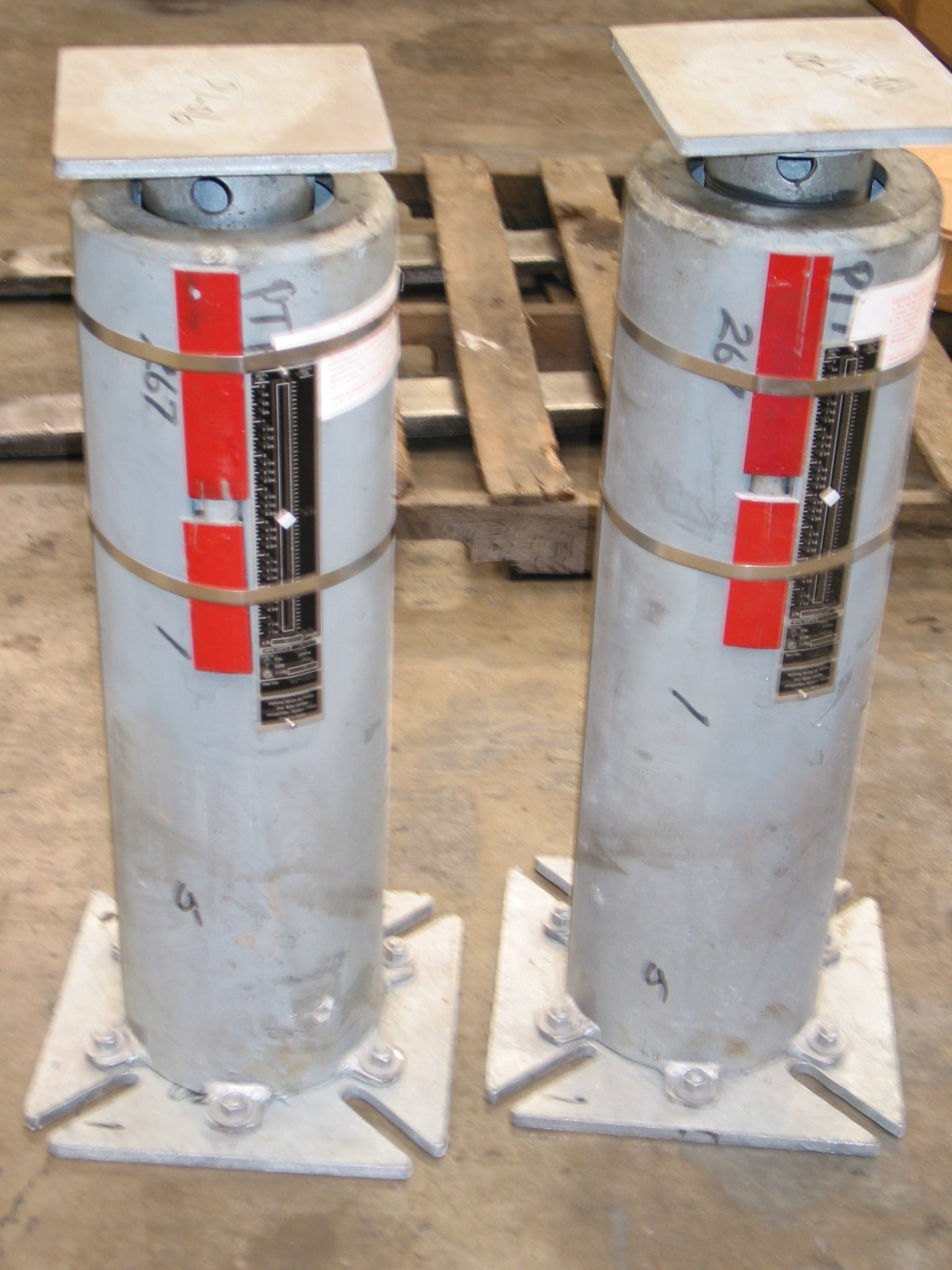
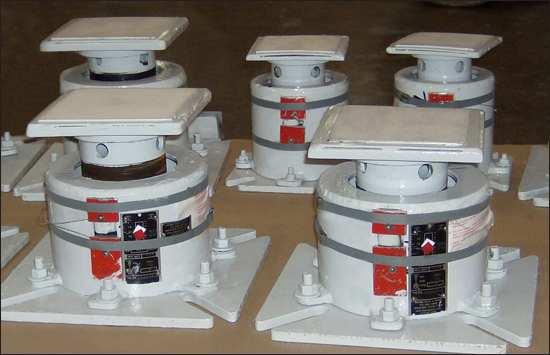
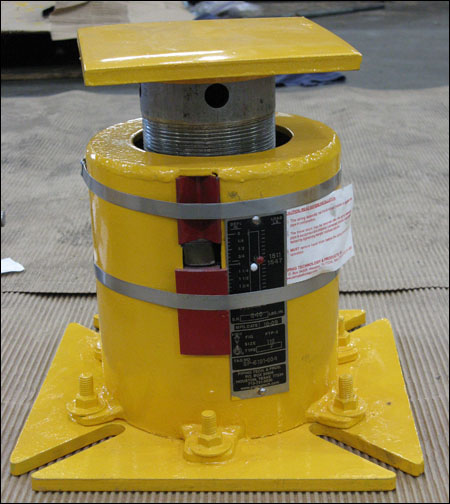
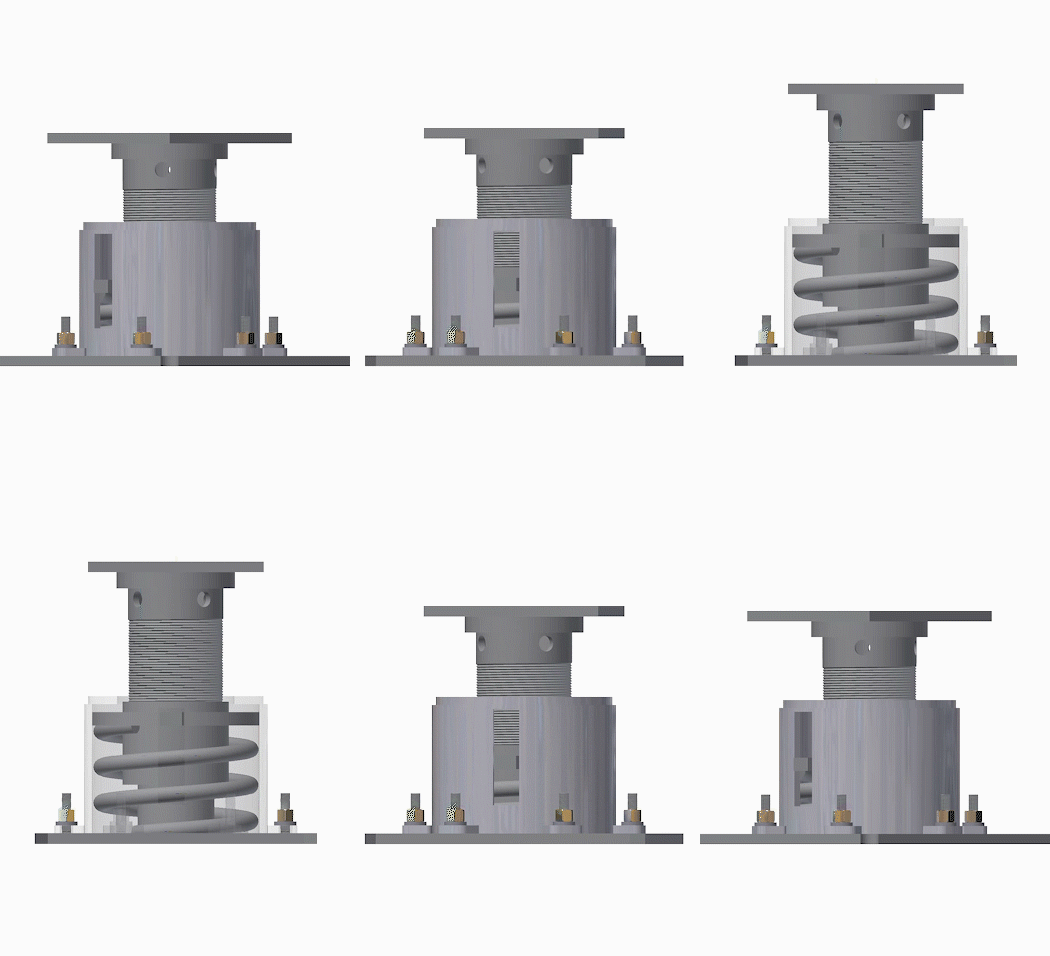
| TYPE F |
The spring support is designed to support
piping from below, directly from the floor or supporting
steel. Adjustment is made by inserting a bar into holes
in the load column and turning the load column as a jack
screw. The base plate is bolted to the case and has four
holes for fastening.
The installed height of the base type (F-type) spring should be
specified as follows:
With upward movement from cold to hot position: The installed height
should be the midpoint between the minimum and maximum "X" dimension
plus the thickness of the load flange.
With download movement from cold to hot position: The installed height
should be midpoint between the minimum and maximum "X" dimension plus the load flange thickness plus
the amount of the vertical movement. |
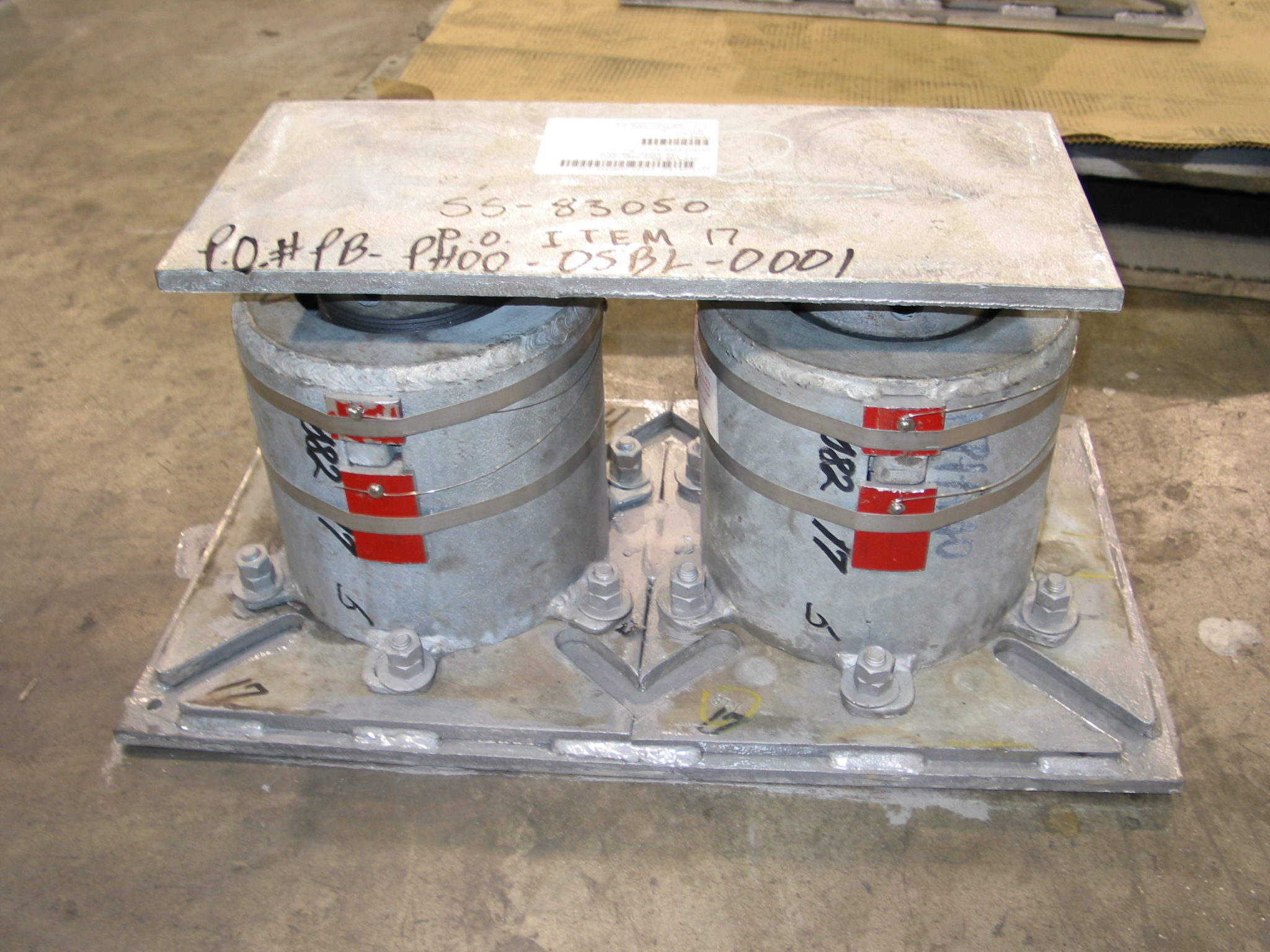
| TYPE G |
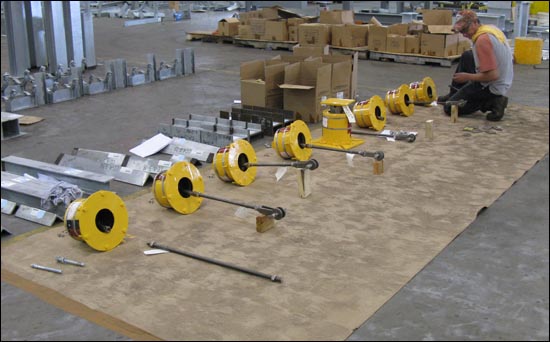
The spring support assembly is formed by welding two
standard spring assemblies to the ends of a pair of
channels. Type G assembly can accommodate unusually heavy
loads, and is especially adaptable for avoiding
interference in spaces where headroom is limited. The
assembly can be furnished with center- to-center
dimensions, as specified by the purchaser. When ordering
Type G, divide the total pipe load in half to select the
proper spring size. The travel range of the springs
remains unchanged. |
The way a variable spring support responds to an applied load
depends on the coil or coils inside the casing. Each coil
arrangement has a spring rate expressed in units of pounds/inch
(or kilograms/millimeters) of compression. The required coil size
is determined by load while the required number of coils (length)
is determined by the anticipated range of movement. A longer coil
or coils placed in series will provide greater travel for similar
loads. Manufacturers use their figure numbers to designate the
coil arrangements which provide greater movement. At Piping
Technology & Products, Inc, we use PTP-1, PTP-2, PTP-4,
PTP-6, and PTP-8 to designate the five standard coil arrangements
we employ to increase the working range of travel of variable
supports. The Load and Travel Tables on pages 17 and 18 are
color-coded to identify the travel and spring rates for each PTP
figure number.* These tables can be used to select the PTP Figure
Number and size required for a particular application.
LOAD AND TRAVEL TABLE*
The twenty-three columns designated 00, 10, 20, ..., 220
identify the size and spring rate of coils used in the variables.
The larger numbers have higher spring rates and are used to
support greater loads. The recommended working range of loads for
each size is shown between the red lines in the tables. The
center of the working range is colored blue. Selecting variables
with the loads within the working range provides a reserve above
and below to insure the coil can function inside the casing. In
using the Load and Travel Table to choose the proper variable
support, it is best to have the operating (hot) load and an
amount and direction of expected movement. Variability is a key
criterion in selecting the figure number and size. Variability is
the percentage of change in the supporting force between the
operating (hot) and installed (cold) positions calculated as
shown:
VARIABILITY = (Spring rate * movement )
/Operating Load
Good practice, as specified by MSS SP-58, is to choose a
support with variability less than or equal to 25%.
Always try to choose a variable with the operating (hot) load
near the center line (blue) of the working range in the Load and
Travel Table. If you have a situation in which you cannot select
a standard variable which has both the operating load and the
installed load within the working range, contact us and we will
help you determine alternatives.
The quality of the spring coil is very important to
performance. Piping Technology buys coils from major suppliers
with automated production facilities and Quality Assurance
programs to provide the highest quality at competitive prices. We
keep an extensive inventory of coils at all times so we can
respond to the emergency requirements of our customers.
Most of our customers request neoprene coating for their
spring coils, which we do in our facility. Neoprene protects the
spring coil from many corrosives without affecting the flex life
of the coil. In some cases, such as in a furnace installation,
temperatures are too high for neoprene. We apply paint or other
types of coatings for this situation. Neoprene is recommended
only for operating temperatures up to 225 degrees F.
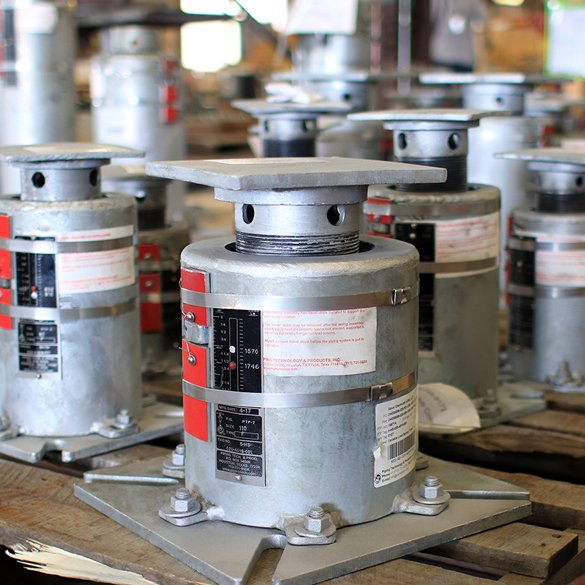
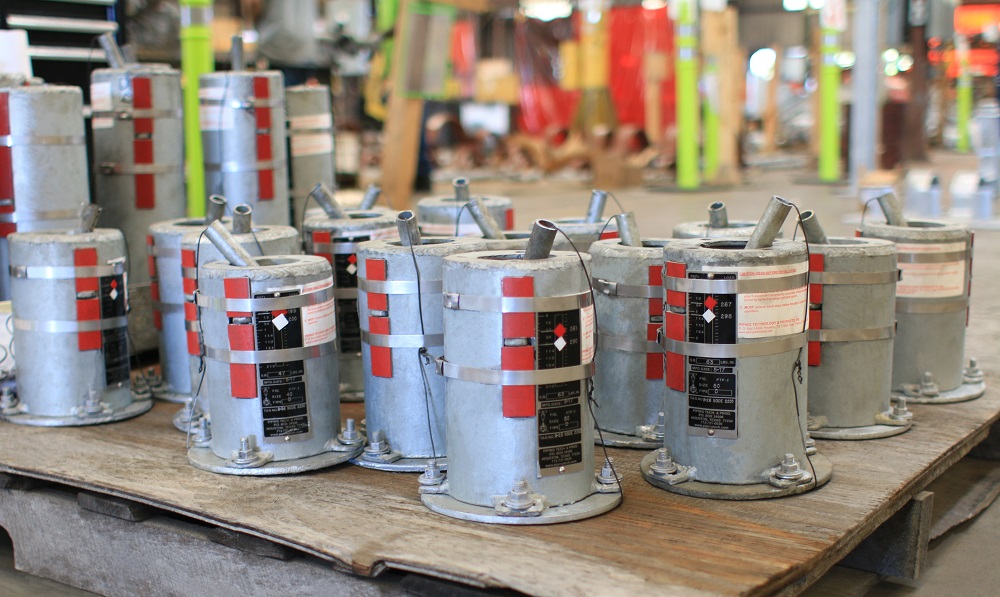
Each variable spring we build is placed in a load cell and
calibrated to the design load and movement. The name plates
(examples shown in Figure C) show the position where the pressure
plate meets the coil at the operating (hot) load and the
installed (cold) load positions. The name plate also shows PTP's
figure number, size, spring rate, and the customers designated
mark or tag number.

VARIABLE SPRING NAME PLATES
PHYSICAL DIMENSIONS
The physical dimensions of variables are different depending
on the figure number and size you have selected. The following
pages provide drawings and dimensions for every combination of
PTP's standard variable supports. If you have a requirement for
which you do not have clearance for the standard spring, please
contact us about a modification to satisfy your requirement.
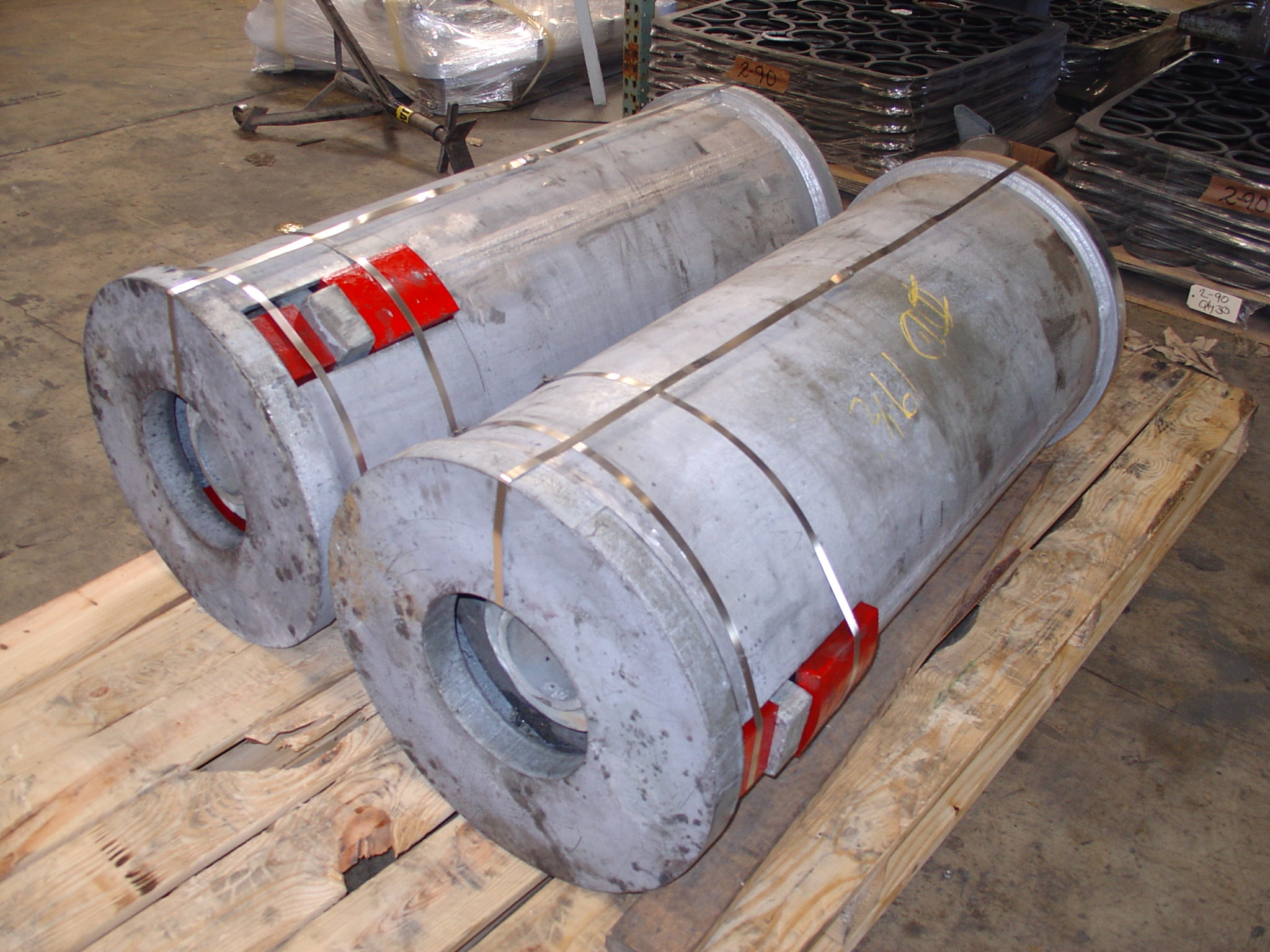
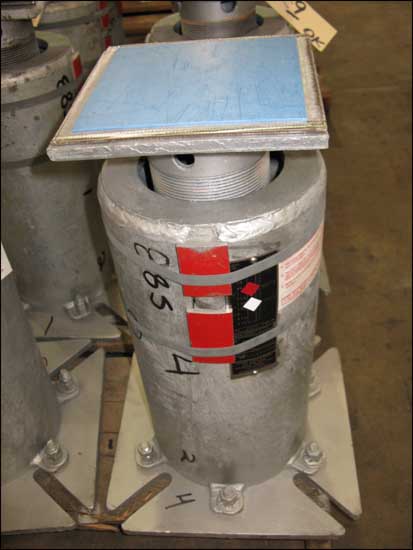
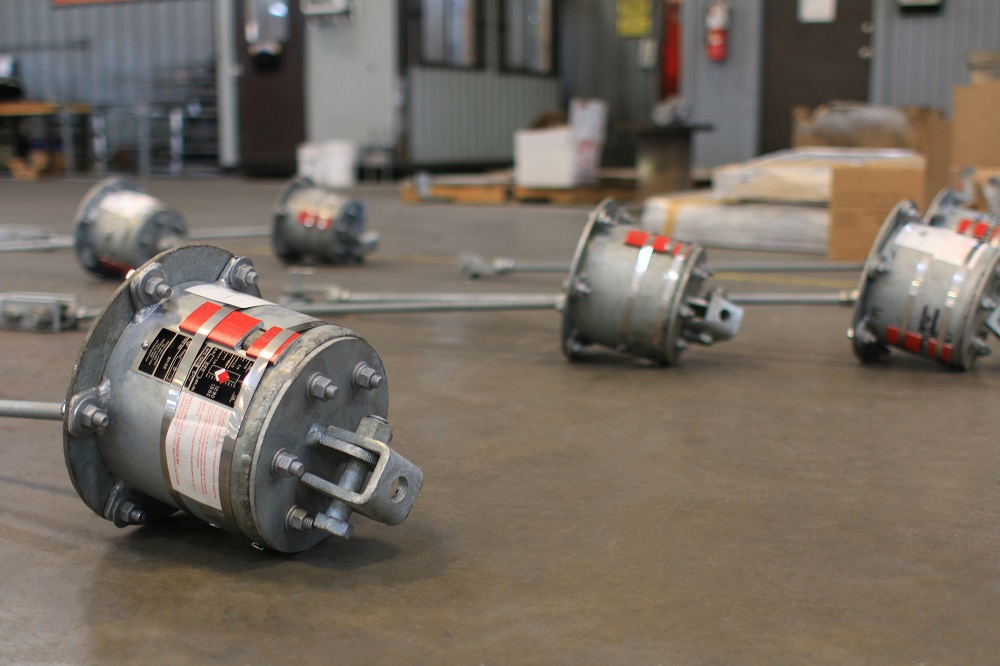
During assembly the coils are pre-compressed and travel stops,
which are painted red, are installed and banded in place with
steel bands as shown in the figure below. Any load, such as in
hydro-testing of the pipe, applied to the variable spring prior
to removing the travel stops will not be applied to the coil.
When installation is complete, the travel stops must be removed
so the variable spring can function properly.
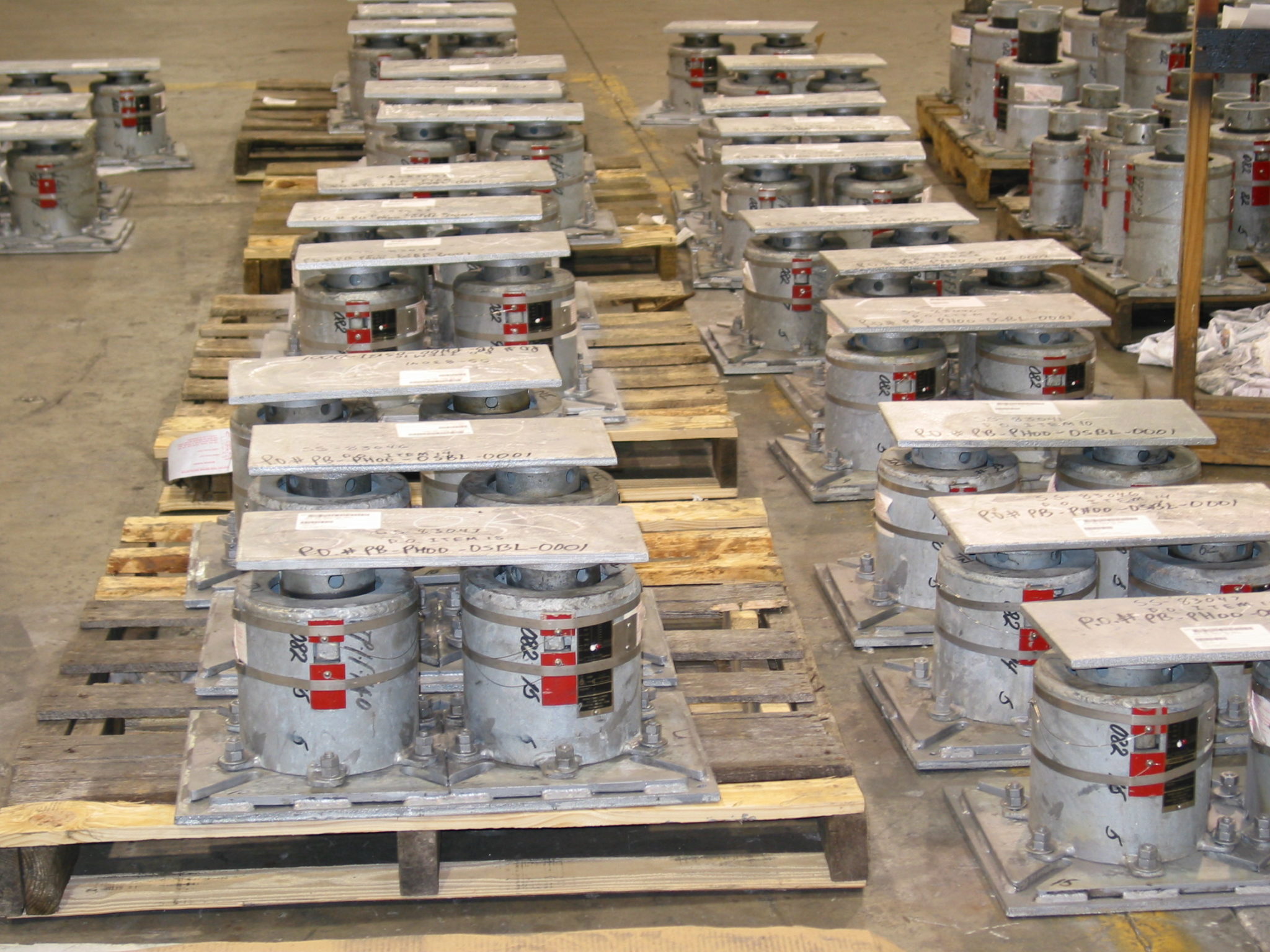
FINISH
Galvanizing provides the most cost-effective finish for use in
corrosive environments. Because the majority of our customers
specify galvanized finish, we maintain a large inventory of
galvanized components which enables us to assemble and ship
variables very quickly. A longer delivery time is needed when
finishes other than galvanized are specified.
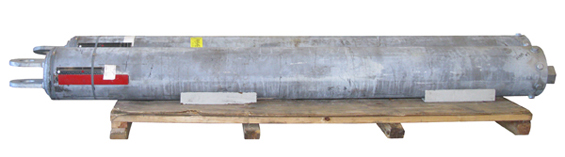
SPECIAL FEATURES
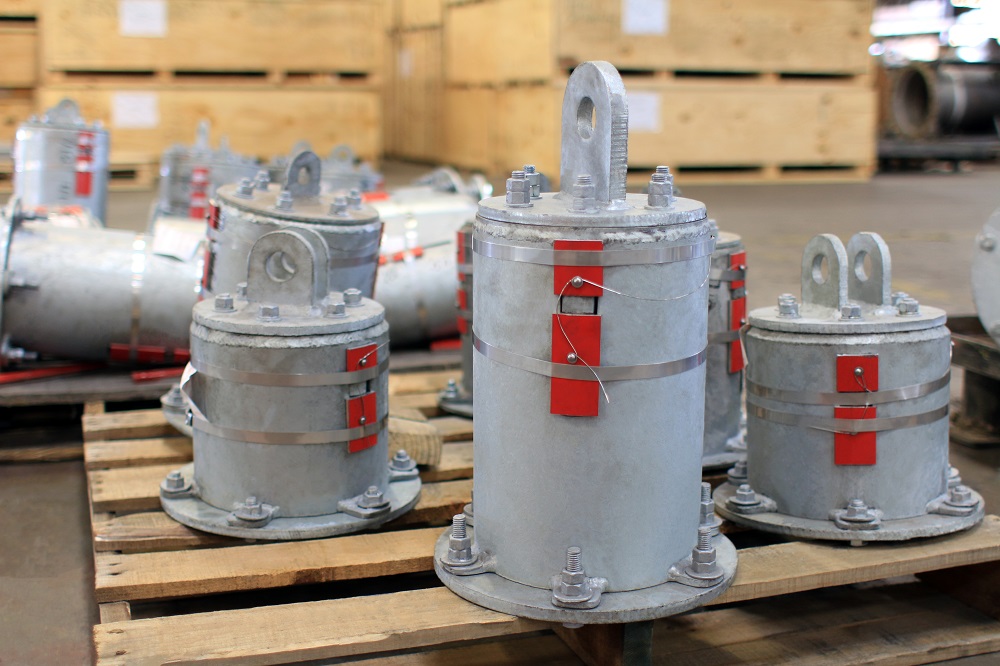
Special features can be provided with the PTP standard
variables when required. For example, lifting lugs, such as those
shown in the figure below, can be helpful for installing large
hangers. Other special features include upper and lower limit
stops, guided load columns, jacking bolts, Type F PTFE, 25% glass filled,
collars, or extended load columns. Special features may increase
the price and the time required for delivery.

FEATURES
- Precompression - precompressing the spring coil into the
hanger casing saves headroom and erection time.
- Full-length slots in the casing at two locations 180
degrees apart allowing for complete in-service visual
inspection of the spring coil and other internal
components.
- For each series, there is a reserve travel at the upper
and lower limits of the working range of the hanger, and
any travel beyond this reserve travel becomes either free
up movement or a limit stop for downward
travel.
- The allowable stress of the coil spring conforms to MSS
SP-58.
- All-steel construction-spring and casing are fabricated
of steel and are rugged and compact.
- Anti-corrosive material (stainless steel) is used for the
nameplate.
- Load Indicators are clearly visible in the slot and are
easily readable.
- The piston plate serves as a centering device or guide,
maintaining spring concentricity under eccentric loads.
- Finish - hot dipped galvanized, or other, as specified.
- All F-type supports are supplied with a load flange.
|