Big Ton Spring Supports with Stainless Steel Rollers

December 29, 2025

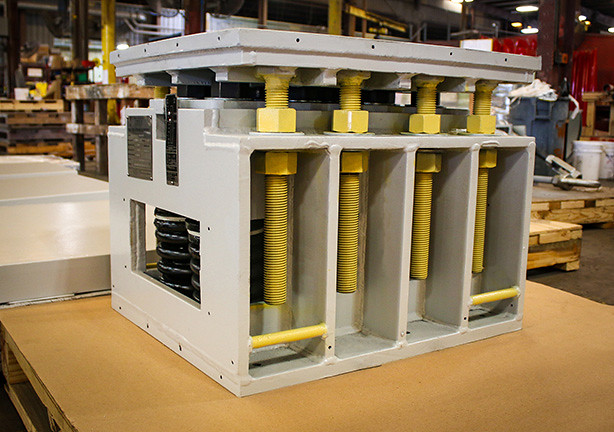
Big Ton Springs Designed with Stainless Steel Rollers for a Chemical Plant


Innovation and customer focus have been at the core of our business since day one. A defining example of this commitment is the Big Ton Spring Support, a solution engineered to meet a critical customer need when no viable option existed in the marketplace.

The challenge was significant: support an extremely large vessel within a confined space while eliminating the need for expansion joints—components that are prohibited in many facilities due to the hazardous nature of the materials being processed. Our customer needed a safe, reliable, and space-efficient solution, and our engineering team delivered.

Drawing on decades of engineering expertise, we developed the Big Ton Spring Support to handle exceptionally high vertical loads over 78,000 pounds, all within a compact footprint and with easy post-installation adjustment. The result is a robust, adaptable system designed to perform where conventional supports fall short.

The Big Ton Spring Support is best described as a rigid load-distribution platform supported by multiple springs operating in parallel. This proven design approach—commonly used beneath horizontal pressure vessel saddle supports and paired with slide plates or roller systems—offers unmatched load capacity, flexibility, and reliability. Its modular, multi-spring configuration allows for customization while maintaining off-the-shelf availability, enabling faster lead times and reduced project risk.

By combining innovative engineering with practical, real-world solutions, the Big Ton Spring Support exemplifies our commitment to delivering high-performance products that solve complex challenges, enhance safety, and provide exceptional value to our customers.

When a chemical processing facility in Brazil required a highly specialized support solution, they turned to our engineering team to deliver a design that balanced strength, durability, and precise movement control under demanding conditions.

For this project, we custom-designed Big Ton spring supports equipped with stainless steel roller assemblies, tailored specifically to the plant’s operational and environmental requirements. The support frames were fabricated from carbon steel, while 2205 duplex stainless steel shim plates were selected to provide superior strength and corrosion resistance.

A key element of the design was a large, custom-fabricated “oil pan” constructed from AR400 abrasion-resistant steel, chosen for its exceptional durability and wear resistance. AR400 steel offers a minimum Brinell hardness of 360 and a nominal hardness of 400, making it ideal for long-term service in high-load applications.

The stainless steel rollers were engineered to fit precisely within the oil pan, with each Big Ton support positioned directly on top. The pan is filled with oil to provide continuous lubrication, allowing the system to accommodate axial and lateral movement smoothly while reducing friction and wear. To further enhance performance and reliability, the assemblies include specialized spring coils and neoprene drip shields, protecting both the coils and lubrication system from debris and contamination.

Each Big Ton unit measures 26-1/2″ × 33″ × 26-1/2″, delivers 0.499 inches of vertical movement, and features a spring rate of 13,450 lb/in. Designed for operating loads up to 78,318 pounds, every unit was load-tested prior to shipment to ensure performance, safety, and reliability in the field.

This project highlights what we do best—engineering solutions where standard products fall short. Backed by an experienced team of engineers and designers, we routinely transform unique and unconventional requirements into proven, practical solutions. By combining innovation, technical expertise, and a deep understanding of real-world applications, we help our customers turn complex challenges into successful outcomes.


Read More

The Role of Cold Piping in Your Data Center PUE Score

December 26, 2025

Pipe Guides from Piping Technology & Products help secure data center servers.

How Does Cold Piping Design Directly Impact Data Center Energy Efficiency and PUE?

In the relentless pursuit of energy efficiency, data center operators often focus on server-level optimization and massive cooling units. However, one of the most significant yet overlooked areas for improvement lies beneath the surface: the piping infrastructure.

The industry standard for measuring efficiency is the Power Usage Effectiveness (PUE) metric, calculated as:


Pue Formula: Understand the Role of Cold Piping in Your Data Center PUE Score


A perfect score is 1.0, meaning 100% of all energy goes directly to IT equipment. In reality, any energy consumed by cooling, lighting, and power delivery increases the PUE score. Any score below 1.2 is excellent; the US Department of Energy reported an average of 1.5 to 1.58 in 2022, and the current average is closer to 1.8 or 2.

The Cold Piping-PUE Connection

The chiller plant and distribution system, which rely entirely on piping, are a major part of the “Total Facility Energy.” A poorly designed or inadequately insulated piping system leads to thermal losses—heat gain in chilled-water lines or heat loss in hot-water lines—forcing chillers or heating units to work harder. This extra work is an energy penalty that increases your PUE score.

Simply put: Better-insulated, more efficiently designed piping means less energy spent on compensation, leading to a direct, measurable decrease in your PUE.

Engineering Excellence: Four Piping Components That Drive Down PUE

Maximizing efficiency requires a holistic approach to the piping system, treating every component as a critical defense against energy waste. Specifically, four key components work synergistically in a data center environment to maintain system integrity and thermal performance.

1. Pipe Supports: The Foundation of Thermal Integrity

Standard pipe supports (such as trapeze hangers or clamps) are essential for carrying the load of the piping and its contents. However, if a standard, conductive metal support is clamped directly to a chilled-water pipe, it creates a thermal bridge.

  • Thermal Bridging: This is a point of minimal resistance where heat from the surrounding environment can easily transfer to the cold fluid inside the pipe, increasing the fluid’s temperature.

This heat gain forces the chiller to expend more energy to re-cool the water, resulting in higher operational costs and a worse PUE.

2. The PUE Game-Changer: Pre-Insulated Pipe Supports

To combat thermal bridging, pre-insulated pipe supports (also known as cryogenic or low-temperature supports) are the most effective solution. These supports feature a non-conductive, high-density insulation material (like polyisocyanurate (PIR) or polyurethane foam) inserted between the pipe and the metal clamp.

  • PUE Benefit: By breaking the thermal connection between the pipe and the building structure, pre-insulated supports virtually eliminate heat transfer at the support point. This preserves the chilled water’s temperature, reducing the chiller’s load and lowering your data center’s PUE.

3. Pipe Guides: Controlling Movement for Insulation Longevity

Piping systems naturally expand and contract due to thermal changes. Pipe guides are mechanical devices that restrain lateral movement while allowing axial (lengthwise) movement.

  • PUE Benefit: Uncontrolled pipe movement can damage the pipe’s insulation jacket, leading to cracks, gaps, and eventual failure. These breaches in the insulation become new sources of heat gain. By correctly guiding the pipe, its insulation remains intact and functional for longer, maintaining the system’s thermal efficiency and its PUE advantage.

4. Expansion Joints: Managing Stress and Maintaining Seal Integrity

Expansion joints (or bellows) are flexible components installed in the piping system to absorb significant movements, vibrations, and thermal stresses.

  • PUE Benefit: A system without proper stress management can suffer from fatigue, leading to leaks or damage to the surrounding equipment. A leak in a chilled-water system requires constant replenishment of treated, cooled water—a significant source of energy and resource waste. Expansion joints ensure the structural integrity and sealing of the piping system, preventing energy and fluid loss, and keeping the PUE score low.

The Roadmap for Superior PUE Performance

The true power of these components is in their collaboration. In a data center cooling loop:

  1. Pre-insulated pipe supports lock in the cold temperature by preventing heat transfer.
  2. Pipe guides help extend the lifespan of the critical insulation jacket by managing movement.
  3. Expansion joints absorb significant thermal movement and mechanical stress, preventing structural failures and costly leaks.
  4. Well-designed piping minimizes pressure drop, reducing pump energy consumption.

When engineered as a complete system, this combination drastically minimizes the energy required for cooling, allowing the “Total Facility Energy” to drop significantly, and moving the data center closer to the coveted PUE of 1.0.

Q: What is the single most significant piping-related factor that raises a data center’s PUE score?

A: The single most significant factor is thermal bridging at standard, conductive pipe supports. This uncontrolled heat transfer forces chillers to run longer and harder, directly increasing the total energy consumption and the PUE score. Replacing standard supports with pre-insulated pipe supports is the most effective countermeasure.

Take the Next Step in Data Center Efficiency

Are your pipe supports costing you energy and money? Maximize Efficiency. Start Now.

Don’t let thermal bridging inflate your Power Usage Effectiveness (PUE). Contact Piping Technology & Products to consult with our engineers on custom-designed, pre-insulated supports, pipe supports, and expansion joints tailored to your data center’s cooling needs.


Read More

Efficiency on Tap: How Piping Solutions Safeguard Beer Flavor and Stability in Brewery Operations

December 23, 2025

Safeguard brewing operations with cryogenic supports, variable spring hangers and constant supports.

Why is Cold Chain Management the Most Critical Factor in Brewery Quality Control?

In the brewing world, “fresh” isn’t just a marketing buzzword; it’s a biological requirement. From the moment a beer finishes fermentation to the second it hits the consumer’s glass, temperature is the primary guardian of flavor.

The cold chain, the uninterrupted series of temperature-controlled storage and distribution activities, is where a brewery’s reputation is either solidified or lost. For modern breweries, managing this chain isn’t just about refrigerated trucks; it starts deep within the facility’s infrastructure, specifically in the complex network of chilled glycol lines and stainless-steel piping.

How Does Thermal Fluctuation Impact Chemical Stability and Shelf Life?

Beer is a volatile solution of proteins, esters, and hop compounds. When the cold chain is compromised, several chemical “dominoes” begin to fall:

  • Oxidation Acceleration: Chemical reactions roughly double in speed for every 10°C (18°F) increase in temperature. Warmth accelerates the development of trans-2-nonenal, the compound responsible for that dreaded “cardboard” off-flavor.
  • Microbial Spoilage: While alcohol and hops provide some protection, certain lactic acid bacteria thrive in warmer environments, leading to souring or “ropey” textures in non-pasteurized craft products.
  • CO2 Solubility Issues: As temperatures rise, carbon dioxide becomes less soluble in liquid. This creates “breakout” in the lines, leading to excessive foaming, inconsistent pours, and significant product waste at the tap or canning line.

The Infrastructure Gap: Where Most Cold Chains Fail

Many breweries focus on their walk-in coolers but ignore the “transit” areas of their facility. If your glycol lines are poorly insulated or if your piping supports are creating thermal bridges, you are bleeding energy and risking temperature spikes before the beer even leaves the building.

What Are the Technical Requirements for Maintaining a High-Performance Brewery Cold Chain?

To maintain a “True Cold” environment, brewery engineers must look beyond the thermostat and examine the mechanical integrity of their cooling systems.

1. Eliminating Thermal Bridging

Standard metal pipe hangers can act as thermal conductors, pulling heat from the environment directly into your chilled lines. Using pre-insulated pipe supports—designed specifically for cryogenic or chilled applications—creates a thermal break that maintains the fluid’s internal temperature.

2. Managing Thermal Expansion and Contraction

Brewery piping undergoes constant thermal cycling. When lines move, they can chafe against supports, leading to insulation failure and condensation. Condensation is the enemy of the cold chain; it leads to mold growth and “wet” insulation, which loses its R-value entirely.

3. Precision Fluid Dynamics

The efficiency of your heat exchangers and cooling jackets depends on consistent pressure. If piping supports fail or cause “sagging” in the lines, it can lead to air pockets or uneven glycol distribution, creating “hot spots” in fermentation tanks.

Essential Engineering Solutions for the Modern Brewhouse

To address these technical challenges, Piping Technology and Products (PT&P) provides a specialized suite of hardware designed to bulletproof your refrigeration infrastructure.

High-Efficiency Insulated Supports

  • Cryogenic Supports (Cold Shoes): The gold standard for chilled glycol and ammonia refrigeration. They eliminate thermal bridging, ensuring that the cold stays inside the pipe where it belongs.
  • Pre-Insulated U-Bolt Supports: Ideal for exterior piping or areas with high humidity, these provide 360-degree insulation to prevent condensation and the energy loss associated with “sweating” pipes.

Advanced Pipe Hangers and Movement Control

  • Variable Spring Hangers: These supports balance the weight of the pipe as it moves during thermal cycles. This is critical for fermentation tank jackets and chiller connections, where rigid supports could cause mechanical fatigue.
  • Constant Supports: For long horizontal runs of chilled lines, constant supports accommodate vertical movement without shifting the load, maintaining the structural integrity of your facility.

Expansion and Vibration Mitigation

  • Rubber Expansion Joints: Perfect for pump inlets and chiller headers, these joints absorb the mechanical vibration that can lead to leaks, while also quieting the “hum” of the brewhouse.
  • Metal Bellows Expansion Joints: For dual-purpose lines or steam-based Clean-in-Place (CIP) systems, these withstand higher pressures and temperatures while allowing for safe thermal expansion.

Structural Protection

  • Wear Pads and Slide Plates: By allowing pipes to move smoothly over structural steel, these components prevent insulation abrasion, a common failure point in older breweries.

What Are the Most Common Infrastructure Challenges in Brewery Cold Chains?

Brewery Cold Chain, Food and Beverage Production: Frequently Asked Questions

1. How does thermal bridging in piping systems affect brewery energy costs? 

Thermal bridging occurs when highly conductive materials, like metal pipe hangers, create a direct path for heat to transfer from the ambient environment into your chilled glycol lines. This “heat leak” forces your chiller to work significantly harder to maintain target temperatures. By installing specialized insulated pipe supports, breweries can eliminate these bridges, reducing chiller energy consumption by 15–20% and preventing condensation that can lead to mold and structural corrosion.

2. Why is condensation on glycol lines a major risk to brewery food safety? 

Condensation on uninsulated or poorly supported pipes creates a damp environment where mold and mildew thrive. In a brewery, this microbial growth can lead to cross-contamination in the cellar or packaging areas. Furthermore, persistent moisture often leads to Corrosion Under Insulation (CUI), which can cause sudden pipe failure. Using moisture-resistant, pre-insulated pipe supports ensures the “dew point” stays outside the insulation jacket, keeping your facility dry and sanitary.

3. What role do pipe supports play in preventing glycol system leaks? 

Piping systems in a brewery are subject to constant thermal expansion and contraction as they cycle between cooling and cleaning temperatures. Rigid or inadequate supports can cause “stress points” at joints and valves, eventually leading to glycol leaks. Using variable-spring hangers and expansion joints allows the piping to move naturally without placing mechanical strain on the system, significantly extending the lifespan of your infrastructure and preventing costly product loss.

Boost Efficiency in Your Brewing Operations: Piping Technology and Products (PT&P)

At Piping Technology and Products, we understand that in the food and beverage industry, a pipe is never “just a pipe”—it is a lifeline for your product. We specialize in engineering and manufacturing high-performance components designed to mitigate thermal losses and mechanical stress.

By implementing PT&P’s engineered solutions, breweries can:

  • Reduce Energy Costs: Minimize chillers’ workload by eliminating thermal leaks and bridging.
  • Ensure Product Consistency: Maintain precise temperature control from the fermentation tank to the canning line.
  • Extend Infrastructure Lifespan: Prevent corrosion under insulation (CUI) and mechanical fatigue caused by constant thermal cycling.

Bolster and Protect Your Brewery’s Infrastructure

Don’t let a hardware oversight ruin a premium batch of beer. Whether you are scaling up to regional distribution or improving your current operations, our engineers are ready to help you design a thermal-efficient system that protects your investment in piping infrastructure.

Contact our engineering and field services team to audit your chilled line supports and improve your brewery’s operations.

Read More

Constant Spring Supports with Stainless Steel & Graphite Slide Plates

December 22, 2025

U-Type Constant Spring Supports in Texas

Type: Constant Spring Supports
Size: 35-7/16″ Height & 75-3/4″ Length
Material: A36 Carbon Steel with HDG | 304 Stainless Steel
Design: 9″ Total Travel at 979°F | Operating Load 6,183 lb.
Testing: Hydro tested at 6,744 lb.

These products are used across a wide range of industrial facilities worldwide, including petroleum refineries, renewable diesel plants, chemical processing facilities (such as propane/propylene splitter units), and power plants. PT&P has the capability to custom design and manufacture constant spring supports for specific load requirements and diverse environmental conditions. Notably, just last year we supplied similar constant spring supports carrying loads in excess of 150,000 lb for crude oil processing at one of the largest refineries in the world.

Petroleum refineries convert crude oil into products such as jet fuel, gasoline, polypropylene, polyethylene, propane, sulfur, carbon black feedstock, and diesel, which are used for transportation, heating, chemical feedstocks, power generation, renewable energy applications, and roadway paving.

Constant spring supports use a spring coil or series of coils to accommodate pipe movement from the installed (cold) condition to the operating (hot) condition. A defining feature of constant supports is that the supported load remains uniform throughout the entire deflection range, ensuring no variation in load on the piping or connected equipment.

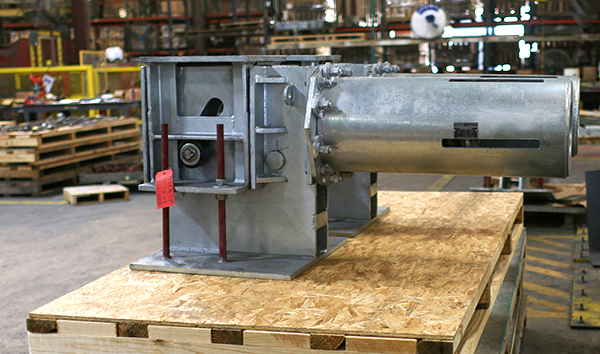
These 200 U-Type constant spring supports with slide plates were designed for a plant in Texas. They are fabricated from A36 carbon steel with an HDG finish and are typically designed for vertical movement only. However, when there is lateral or axial movement in the piping system, slide plates can be used in conjunction with these constants. In this instance, graphite slide plates are bolted to the constant’s load flange and used with an upper slide plate manufactured from 304 stainless steel with a mirror finish. The upper slide plate can be welded to the base of a pipe shoe, trunnion, or the saddle of a pressure vessel. Each of the constant spring dimensions is 35-7/16″ in height and 75-3/4″ in length. They are designed for a piping system with 9″ of total travel at 979°F and an operating load of 6,183 lb. Each of these units were load tested to meet the hydro test load of 6,744 lb. before shipment.
Learn more about constant spring supports.

Read More

Scope Creep Prevention: Your 7-Point Checklist Before the Turnaround Clock Starts

December 18, 2025

Don't leave your project's safety and budget to chance. Invest in a comprehensive pipe stress analysis with Piping Technology and Products.

Scope Creep Prevention: Your 7-Point Checklist Before the Turnaround Clock Starts

The most effective way to avoid scope creep during your turnaround is to make it functionally impossible before the work starts. Once the Scope Freeze Date hits, every addition is a direct threat to your schedule and budget.

For turnaround managers and project engineers, here are the seven non-negotiable rules to enforce for a successful, on-time completion of the planned work.

Rule 1: Physically Verify Your MRO Inventory 

A database showing 12 units of an essential pipe guide or expansion joint doesn’t mean those items are on the shelf, accessible, or undamaged. Before the freeze date, a designated team member should physically confirm and tag each required Maintenance, Repair, and Operations (MRO) item within the scope. A scope addition resulting from a missing part is still a schedule killer.

Rule 2: Secure Final Sign-Off on Every P&ID Revision

Scope creep often hides in outdated documentation. Ensure that every single Piping and Instrumentation Diagram (P&ID), isometric drawing, and associated engineering document (including final pipe stress analysis reports) related to the planned work has been formally signed off by Engineering, Operations, and Maintenance. This ensures alignment on component types, sizes, and locations before the tools are staged.

Rule 3: Clearly Define What Qualifies as an “Emergency Change”

If everything is an emergency, nothing is. Establish strict criteria for any change request after the freeze date. The only acceptable triggers for breaking the scope should be:

  • Immediate safety hazard
  • Imminent environmental permit violation
  • Failure of an asset that prevents unit restart/integrity (e.g., a critical pipe support failure discovered upon opening a line).

Rule 4: Establish a 24-Hour Review Cycle for Field Change Requests (FCRs)

When a legitimate FCR does arise—such as the discovery of unforeseen corrosion under insulation (CUI) on a critical line—you cannot allow it to languish. Define a specific, cross-functional, or technical review board (TRB) that is mandated to approve or reject the FCR within 24 hours. Time spent waiting for approval is time lost on the schedule.

Rule 5: Perform a Site Walk with All Three Pillars: Maintenance, Operations, and Engineering

One week before the turnaround, conduct a final joint site walk.

  • Maintenance flags access issues.
  • Operations confirms isolation points.
  • Engineering (including those responsible for specialized equipment like expansion joints and high-temperature pipe supports) verifies component identification and confirms the physical reality matches the design drawings. This joint verification often reveals “known surprises” that can be scoped before the freeze.

Rule 6: Have a Pre-Approved List of Alternative Materials Ready

Sometimes, materials fail quality checks or are damaged during mobilization. To prevent a component sourcing delay from becoming a scope-addition crisis, engineering should provide a pre-approved list of acceptable alternatives for common components such as basic pipe guides, standard clamps, gaskets, and bolting. This allows site teams to quickly swap parts without triggering a formal FCR and halting work.

Rule 7: Ensure the Turnaround Manager is the Only Person Who Can Authorize Budget Exceeding the Baseline

Ultimate financial accountability must rest with one singular role. The Turnaround Manager (or designated sponsor) must have exclusive authority to authorize expenditures beyond the original scope of the budget. Decentralizing this power is the fastest route to uncontrolled cost and scope creep.

The Piping Technology Tie-In: Proactive Pipe Stress Analysis

In heavy industries, scope creep is often triggered by the condition of critical assets such as pipe supports, snubbers, and expansion joints. Unexpected degradation in these areas requires immediate, unplanned work. By following these 7 rules—primarily through diligent pre-walkdowns (Rule 5) and strict inventory management (Rule 1)—you ensure that all necessary specialized components are accounted for, ready, and properly installed, turning potential crisis additions into planned replacements. Proactive pipe stress analysis is key to defining this necessary scope early.

Ready to Optimize Your Turnaround Planning?

Talk to a PT&P engineer today about pre-outage inspection services or customizing your MRO inventory of pipe supports and expansion joints to guarantee readiness for your next turnaround.

Read More

5 Critical Signs You Need a Field Service Inspection for Pipe Supports

December 15, 2025

The Field Services Team from Piping Technology and Products can help you achieve maximum reliability and safety for your critical piping systems.

Recognizing Early Warning Signals in Critical Infrastructure

A comprehensive field service inspection is a predictive measure designed to prevent catastrophic failures in industrial piping systems. Understanding when to initiate an inspection is crucial for maintaining operational integrity. Facility managers and maintenance personnel frequently observe key indicators, such as damaged components (e.g., a broken spring), deviations in system alignment (e.g., pipe sagging), and other critical issues that can turn up in surrounding components and equipment (e.g., rotating equipment balance problems). Proactive assessment during planned shutdowns or in response to unexpected observations ensures the longevity and safety of high-pressure, high-temperature environments.

How do you know it’s time to call the experts? Piping and support systems are designed to operate reliably for decades, but constant temperature cycling, vibration, and external elements can cause problems. Catching these issues early is the difference between a planned repair and a much more expensive emergency shutdown.

Here are five critical signs that signal you need to schedule a professional field service inspection:

1. Discovery of a Broken Rod on a Spring Can

A spring can—or variable/constant effort spring hanger—is designed to manage the vertical movement of piping while providing support. When a spring rod is found broken, it signifies a total, localized failure of that support. This means the entire load previously carried by the spring is now being transferred to adjacent supports or, worse, directly onto equipment or vulnerable pipe sections.

A broken rod is an unmistakable sign that your pipe stress limits have been exceeded, requiring immediate assessment of the entire line for secondary damage.

2. Noticing Line Sagging or Piping Misalignment

Line sagging issues occur when the pipe deviates noticeably from its intended path or slope. This is a common trigger for our customers and often indicates that fixed supports (such as anchors or guides) have failed, or that variable supports (such as spring cans) are underperforming or frozen.

Piping misalignment is not just an aesthetic issue; it creates unanticipated stress points, restricts thermal movement, and can lead to water hammer or flow restriction. An inspection is necessary to diagnose the root cause and recalibrate or replace the failed components.

3. Facing Rotating Equipment Balance Problems

While rotating equipment (pumps, compressors, turbines) has its own maintenance schedule, recurring balance or vibration problems can often be traced back to the attached piping. When a piping support system fails, the resulting stress or weight shift can pull the pipe connected to the equipment’s nozzle.

This imposed stress can distort the equipment casing, leading to shaft misalignment, excessive vibration, and premature bearing failure. If you have recurring equipment issues despite regular maintenance, an inspection of the connected piping supports is essential.

4. Visible Red Flags: Rust, Corrosion, and Missing Components

A visual inspection by your in-house team may reveal critical but straightforward issues. Look for heavy rust, pitting, or corrosion on support components, especially where they interface with the pipe (contact points). Additionally, missing nuts, bolts, U-bolts, clamps, or even entire sway struts are serious concerns.

These signs of external degradation compromise the load-bearing capacity and movement functionality of the supports. A professional inspection will quantify the damage and recommend precise component replacements.

5. Experiencing Unusual Noise or Sudden Vibration

Any sudden or unexplained change in the operational characteristics of a piping system should prompt an immediate investigation. This includes:

  • Clanking or Knocking: Often indicates that pipe guides have failed and the pipe is impacting structural steel or adjacent lines.
  • Squealing or Grinding: May be a sign that a support or slide plate is frozen, preventing the pipe from moving freely as temperatures change, causing friction.
  • Excessive Vibrations: Can signify loose components or the propagation of a structural issue through the piping system.

Discovery of issues often happens during planned shutdowns or unexpected failures. If you notice any of these signs, our team offers specialized inspection services to assess the condition of your spring hangers and piping supports.

The Field Services Team at Piping Technology and Products

Expert Technicians, Real Solutions, and On-Site Support with Piping Technology’s Field Services Team

For facility managers, maintenance engineers, and plant operators who need to ensure the maximum reliability and safety of their critical piping systems, Piping Technology and Products (PT&P) provides rapid-response field inspection services. Unlike general contractors, our specialized experts diagnose hidden stress, misalignment, and potential component failures across your entire support system, leveraging 50 years of engineering experience to identify problems and provide custom-engineered solutions that minimize downtime and prevent catastrophic events.

Schedule Your Assessment with Our Field Services Team

Don’t let a minor problem turn into a major shutdown. Address these critical warning signs immediately.

Contact our Field Services team today to schedule your system assessment and secure your operations.

Read More

Cryogenic Pipe Saddles with Micarta® Insulation for LNG Service

December 15, 2025

Insulated Pipe Supports for Low Temperatures

PT&P manufactured cryogenic pipe saddles for LNG transportation pipelines. These types of insulated supports have been utilized in LNG plants around the world. Insulated supports are also used on cold piping in semiconductor plants or plants that make batteries to eliminate condensation.

Cryogenic Pipe Saddles with Micarta® G-10 Insulation for LNG Service

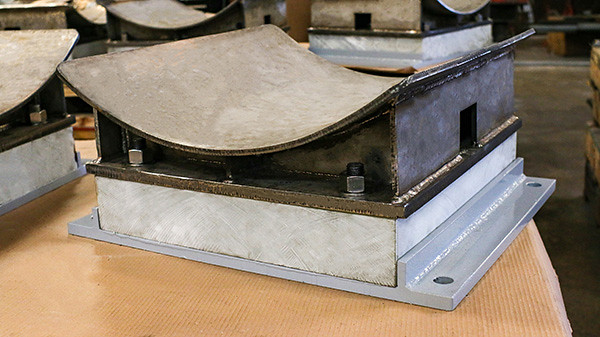
A cold shoe is a pipe support used for cryogenic applications where the transfer of cold temps from the pipeline to the surrounding steel pipe rack is not desirable. These supports can be used for temperatures down to -320° Fahrenheit.  This particular type of insulated pipe saddle assembly was fabricated with a carbon steel base plate, 304L stainless steel saddle, and an insulation block. The overall size ranges from 25” x 19” x 12-¾” to 29” x 25” x 13-3/8”. These pipe shoes were manufactured to support pipe sizes ranging in diameter from 36″ to 42″ NPS.

For additional information about Insulated Pipe Supports go to our product page.

Cryogenic Pipe Saddles Made for LNG Project

For this job, our client was a new entrant into the LNG engineering and design market space, and this was one of their capstone projects internally and for the marketplace.  Given PTP’s long history and experience concerning LNG pipe supports, we served as strategic partners in the engagement.  We identified that the client was using a pre-existing standard that underestimated the amount of Micarta® insulation thickness needed to provide adequate insulation for the facility.

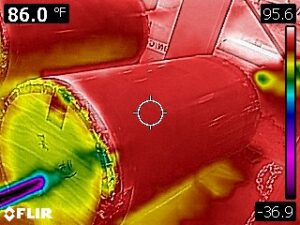
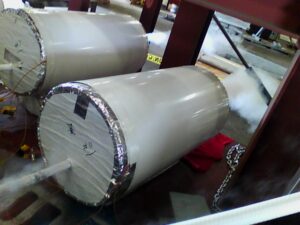
PT&P engineers recognized that the insulation was not sufficient, and we tested the existing design using a test fixture we developed to demonstrate our concern.  PT&P utilized thermal scanning (infrared technology) to measure temperature at various locations around the insulated pipe support. As a result of our tests, our client corrected the concern, saving dollars, man hours, and scheduled project completion.

pipe support thermal scanning image
pipe support on test

Our work with facilities such as these are a great example of our commitment to providing clean, affordable energy to the world.

To find additional information about our Cryogenic Pipe Saddles visit our product page.


PT&P REF. ORIGINAL POST 03092021

Read More

Choosing the Right Materials for Cold Piping in Data Centers

December 11, 2025

Invest in effective insulation for the cold piping in your data center with cold shoes from Piping Technology and Products.

Data Center Cold Piping: Preventing Condensation and CUI with the Best Insulation and Pipe Supports

In a data center, chilled water or cold piping is the lifeline of the cooling infrastructure, directly affecting thermal stability, energy efficiency, and operational uptime. The challenge is in maintaining the pipe’s low temperature while navigating high ambient humidity. Selecting the best-fit insulation material and a thermally efficient pipe support system isn’t just best practice—it’s essential to preventing devastating problems like condensation, corrosion under insulation (CUI), and system failure. This article explores the best materials and support strategies to ensure your cold piping remains a reliable, high-performance asset.

Essential Materials: Closed-Cell Insulation and Insulated Cold Shoes for Chilled Water System Reliability

The primary enemies of cold piping are condensation and thermal heat gain. When chilled water is exposed to warm, humid data center air, moisture condenses on the pipe surface if its temperature drops below the dew point.

  • Condensation: Water is corrosive, and drips can damage sensitive electronic equipment, leading to costly outages. Even more insidious, water penetration into insulation destroys its thermal performance and leads to Corrosion Under Insulation (CUI), a silent killer of piping integrity.
  • Heat Gain: Any thermal energy absorbed by the chilled water forces the chillers to work harder, dramatically increasing the facility’s Power Usage Effectiveness (PUE) and operational costs.

Effective insulation should be both a superior thermal barrier and an impenetrable vapor barrier. Let’s look at some ideal materials for cold piping and their properties.

Choosing the Right Insulation Materials

The ideal insulation for data center cold piping is a closed-cell material with extremely low thermal conductivity and low water-vapor permeability. Closed-cell structures prevent the ingress and migration of water vapor, maintaining the insulation’s integrity over its lifespan.

Material Key Characteristics Advantages: Cold Piping
Flexible Elastomeric Foam Closed-cell, high flexibility. Excellent condensation control, built-in vapor retarder, and easy installation. Most common for HVAC/chilled lines.
Phenolic Foam Rigid, predominantly closed-cell, high R-value. Superior thermal performance (very low k-value), excellent fire resistance (Class A rating), and strong mechanical strength.
Cellular Glass 100% closed-cell, inorganic, rigid. Absolutely zero water absorption, non-combustible, excellent for CUI prevention, and long-term stability.
Polyisocyanurate (PIR) Rigid foam with very low k-value. Highly effective for industrial and sub-zero temperature systems.
Fiberglass Open-cell (requires a dedicated, sealed vapor retarder). Cost-effective, but requires a flawless All Service Jacketing (ASJ) vapor barrier to be effective on cold lines; highly susceptible to moisture-related degradation if the barrier is compromised.

The Role of Specialized Pipe Supports

Even the best pipe insulation can fail at the support points. Traditional metal pipe hangers can create a thermal bridge (or “short”) when the cold pipe makes direct contact with the ambient-temperature support structure. This contact point acts as a concentrated heat-transfer area, leading to localized condensation, insulation compression, and CUI.

To solve this, cold shoes or cryogenic supports are required for cold piping systems.

Features of High-Performance Cold Shoes:

  1. Load-Bearing Insulation: These supports incorporate a high-density, high-compressive-strength insulation material (such as high-density Polyurethane Foam or Cellular Glass) between the pipe and the metal support structure. This prevents the weight of the pipe and fluid from crushing the standard insulation.
  2. Thermal Break: The support effectively separates the cold pipe from the structural steel, maintaining the integrity of the vapor barrier and preventing a thermal short. This keeps the support’s exterior surface at or near the ambient temperature, eliminating localized condensation.
  3. Vapor Barrier Integrity: The design ensures the vapor barrier is continuous around the insulation block, preventing moisture from entering the system at this critical junction.
  4. Movement Accommodation: Supports must also be designed to accommodate the pipe’s thermal expansion and contraction (e.g., resting, sliding, or guided types), ensuring the insulation and vapor barrier are not damaged by pipe movement.

Crucial Consideration: When selecting supports, ensure they are rated for the pipe’s maximum expected load and that the embedded insulation block has the required compressive strength to prevent degradation of the insulation’s thermal properties over time.

Long-Term System Performance and Maintenance

Designing for a long system lifespan requires integrating the insulation and support system from the start.

  • Pre-Insulated Pipe Supports: Some systems opt for pre-insulated pipe supports where the insulation and protective jacketing are factory-applied, ensuring uniform, high-quality, and continuous coverage, which is highly beneficial in data center cooling.
  • Thermoplastic Alternatives: Modern data centers are increasingly using enhanced thermoplastic piping (such as CPVC or Polypropylene). These materials naturally have lower thermal conductivity than metal, significantly reducing the risk of condensation and eliminating the issue of internal pipe corrosion. However, they still require proper insulation and supports.
  • Vapor Retarder Sealing: Long-term performance hinges on the proper sealing of all seams and penetrations in the vapor barrier. Even a small tear or unsealed seam can allow vapor drive, which leads to immediate thermal degradation and CUI. Use matching vapor retarder tapes and mastics as specified by the manufacturer.

By choosing the right combination of high-R-value, closed-cell insulation and specialized, load-bearing cold shoe supports, data center operators can secure a cooling infrastructure that delivers maximum efficiency, prevents system downtime, and ensures long-term reliability.

Why Choose Piping Technology and Products (PT&P)

For data center engineers and facility managers, PT&P is the trusted authority in thermal integrity. In comparison, others offer components. Piping Technology designs and manufactures insulated pipe support systems (cold shoes) that eliminate thermal shorts and guarantee a continuous vapor barrier at the most vulnerable points of your chilled water infrastructure. We don’t just hold your pipes; we secure your uptime by preventing condensation and ensuring your cooling system performs reliably under the most demanding conditions.

Protect your data center’s cooling infrastructure. Learn how to choose the proper closed-cell insulation and insulated pipe supports (cold shoes) to prevent condensation, CUI, and energy loss in cold piping systems. Our team can conduct a pipe stress analysis to help inform the selection process and protect your critical infrastructure.

Protect Critical Data Center Infrastructure: Partner with Our Experts

Don’t compromise your cooling efficiency. Contact our team for an expert consultation and custom quote on engineered cold-shoe supports and insulation solutions that ensure thermal and structural integrity for your next data center project.

Read More

Securing Your Servers: The Crucial Link Between Pipe Guides and HVAC Reliability

December 9, 2025

Pipe Guides from Piping Technology & Products help secure data center servers.

Why are specialized pipe guides critical for maintaining continuous cooling in data centers?

In data centers, every second of downtime translates directly into lost revenue. While much attention is rightly paid to power supply, network redundancy, and server technology, one often-overlooked yet utterly critical component for continuous operation lies within the HVAC (Heating, Ventilation, and Air Conditioning) infrastructure: the indispensable pipe guide.

Data centers are hot. Very hot. Rows upon rows of servers generate enormous amounts of heat that must be continuously dissipated, primarily through chilled water or refrigerant lines. These hydronic piping systems are under constant thermal stress, cycling through temperature changes that cause pipes to expand and contract. Without precise management of this movement, through pipe guides, your entire system is at risk.

Table of Water Systems in Data Centers: 

System Type
Purpose
Common Piping Materials
Key Challenges/Design Considerations
Supports & Expansion Needs
Chilled Water Systems
Circulates chilled water from central chillers or cooling towers to CRAHs or in-row cooling units.
Carbon steel, copper, HDPE (underground)
Thermal expansion, condensation control, and flow balancing
Expansion joints, spring supports, guides to manage thermal movement & vibration
Condenser Water Systems
Transfers heat from chillers to cooling towers in water-cooled setups.
Carbon steel, stainless steel
Outdoor exposure, large diameters, thermal cycling
Anchors and flexible joints to manage thermal growth & structural movement
Technical / Process Water Systems
Supports auxiliary cooling, humidification, and process functions for IT equipment.
Stainless steel, PEX
Cleanliness, corrosion resistance
Insulated supports; smaller diameters, but still require thermal isolation
Glycol / Chilled-Water Mix Systems
Prevents freezing; used in direct-to-chip or rear-door cooling loops.
Copper, stainless steel, PEX
Chemical compatibility, temperature range
Similar to chilled water systems, attention to the glycol mix impacts
Liquid Cooling / Direct-to-Chip Loops
Circulates coolant directly to chips or servers for high-density cooling.
Stainless steel, PEX, reinforced polymer tubing
Precision flow control, equipment interface sensitivity
Highly engineered supports, vibration isolation, and precise alignment
Make-Up Water & Drain Systems
Supplies and removes water for cooling towers and thermal storage.
PVC, carbon steel, stainless steel
Varies by pressure and chemistry
U-loops, flexible connectors near pumps & tanks

Why do standard pipe supports fall short in high-precision data center environments?

Traditional pipe supports, while effective in many industrial applications, often lack the nuanced engineering required for the extreme demands of a data center. Imagine a long run of chilled water piping. As cold water flows through it, the pipe contracts. When the system is offline for maintenance or experiences a load change, the pipe warms up and expands. In modern high-density environments, these lines often feed into chilled distribution units (CDUs), which require perfectly stable pressure and alignment. This constant thermal movement, if not controlled, can lead to:

  1. Excessive Stress on Connections: Flanges, welds, and fittings are the weakest points in a piping system. Uncontrolled pipe movement can exert immense bending moments and shear forces on these connections, leading to fatigue, leaks, and eventually, catastrophic failure.
  2. Misalignment of Equipment: Pumps, chillers, and heat exchangers are precision machinery. If the attached piping pulls or pushes against their nozzles due to uncontrolled expansion, it can cause misalignment, bearing wear, and premature equipment failure.
  3. Pipe “Walking” Off Supports: In severe cases, uncontrolled lateral movement can cause pipes to “walk” off their supports, leading to complete system collapse.
  4. Abrasion and Wear: Pipes rubbing against rigid, unguided supports can experience wear and tear on their outer surface, compromising their integrity over time.

This is where precision-engineered pipe guides become not just beneficial, but essential.

The Role of Pipe Guides: Guiding Movement, Preventing Failure

A pipe guide is designed to control the direction of a pipe’s thermal movement, allowing it to expand and contract axially (along its length) while preventing unwanted lateral (side-to-side) or vertical displacement. This level of control is especially vital for lines carrying technical water, where even minor leaks can jeopardize sensitive IT assets.

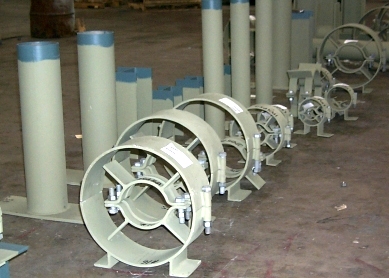
Fig. 6: Cylinder Pipe Guide (Spider Guide) from Piping Technology and Products

Here’s how they ensure data center HVAC uptime:

  1. Directed Thermal Movement: Guides funnel the pipe’s expansion and contraction into a predictable path. This ensures that the primary movement is absorbed by expansion joints, loops, or bellows designed for this purpose, rather than transferring the load caused by the movement into the connections of the equipment attached to the piping.
  2. Reduced Stress on Critical Components: By controlling movement, guides drastically reduce the bending moments and shear forces on pumps, valves, and other sensitive equipment connections, extending their lifespan and preventing leaks.
  3. Enhanced System Stability: They keep pipes securely positioned on their support structures, even during thermal cycles, minor seismic events, or operational vibrations, preventing displacement.
  4. Protection of Insulation: Many pipe guides are designed to accommodate and protect the pipe insulation, ensuring thermal efficiency and preventing condensation on cold lines. Often, these supports incorporate a PTFE (polytetrafluoroethylene) slide plate—a low-friction material that allows the pipe (or its insulation shield) to glide smoothly, minimizing wear and reducing the force required to move it.

Piping Technology and Products: Your Partner in HVAC Performance for Data Centers

 At Piping Technology, we understand that “good enough” is never actually good enough for data center infrastructure. We specialize in designing and manufacturing custom, high-precision pipe supports and guides engineered to your cooling systems’ exact specifications. Our solutions not only meet but exceed industry standards, providing the control necessary to manage thermal stresses and virtually eliminate the risks of pipe-related downtime. We transform potential points of failure into reliable, long-lasting assets.

Is your cooling infrastructure protected from thermal stress? Don’t leave your data center’s uptime to chance. Contact our team for a comprehensive pipe stress analysis and custom-engineered pipe guide solutions designed for maximum reliability. 

Read More

Compact Spring Supports Custom-Designed for Large Diameter Piping at a Chemical Plant

December 9, 2025

Compact Spring Supports Custom-Designed for Large Diameter Piping at a Chemical Plant

These compact spring supports were custom-designed to support large-diameter piping at a chemical plant that manufactures ethylene, propylene, butadiene, benzene, propylene oxide, styrene monomer, and other derivatives and gasoline-blending products. They are designed for large loads (13,623 lb. to 24,038 lb.) and a small confined space with limited thermal movement (from 0.2″ to 0.3″). Compact spring supports (or disc springs) minimize excessive loads on sensitive equipment, so these types of spring support the same load as a conventional variable spring but with a smaller “working range” and utilize 25-50% less space. They are ideal for locating under equipment flanges or other locations where space is limited. The housing is fabricated from A-36 carbon steel and hot-dipped galvanized to protect against corrosion. They have an installed height of 13″ – 15″ and are 21″ in diameter. The “disc springs” are engineered using stainless steel. Each assembly underwent load testing and other NDE before shipment.

PT&P REF. ORIGINAL POST 01262021

Read More
Top