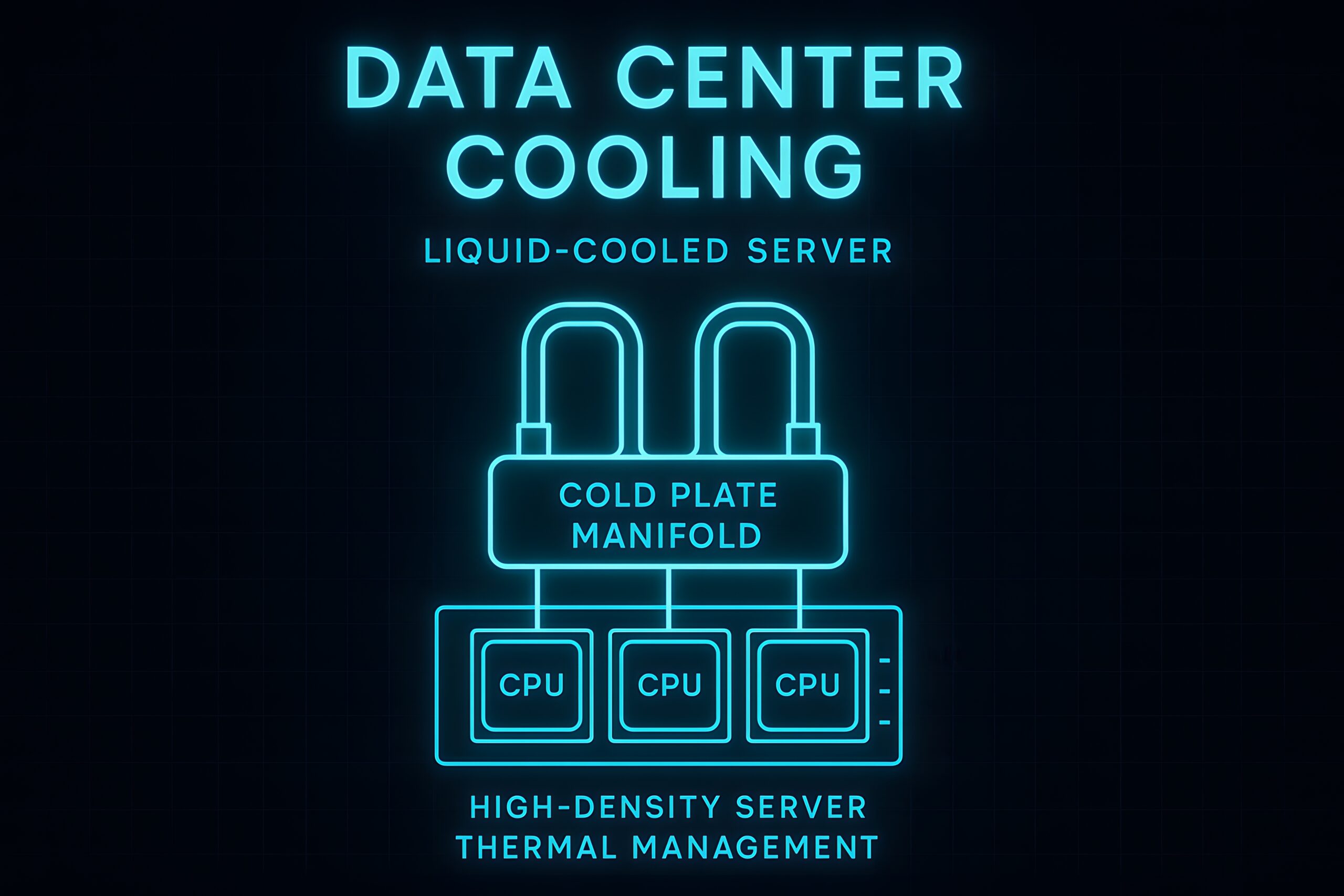
Retrofitting Legacy Data Centers: Integrating New Cooling into Old Spaces

January 30, 2026

Piping Technology and Products adds value in retrofitting legacy data centers for new liquid cooling.


As the demand for high-density AI and cloud computing surges, legacy data centers—often called “brownfield” sites—are facing a critical crossroads. These facilities weren’t initially designed to handle the high heat loads generated by modern liquid-cooled systems or high-CFM (cubic feet per minute) air-conditioning systems.

Retrofitting these spaces isn’t just an engineering challenge; it’s a spatial puzzle. Integrating heavy-duty cooling piping into a facility with low overhead clearance and existing infrastructure requires more than standard parts—it requires custom-engineered solutions.

The Challenge: Modern Cooling in Tight Footprints

In a brownfield project, you aren’t working with a blank canvas. You are competing for space with existing electrical conduits, fire suppression systems, and structural columns. The introduction of large-bore chilled-water or dielectric-fluid piping introduces two major hurdles: weight and thermal expansion.

1. Custom-Engineered Pipe Supports

Standard off-the-shelf hangers often fail to fit in the narrow corridors of a legacy data center. Custom-engineered supports are designed to:

  • Maximize Vertical Space: Low-profile designs that allow piping to run flush against the ceiling or under raised floors.
  • Seismic and Vibration Isolation: Essential for protecting sensitive server racks from mechanical vibrations caused by new high-capacity pumps.
  • Variable Spring Hangers: Used when vertical movement is expected, ensuring that the load on the piping system remains balanced without stressing the legacy building’s structure.

2. Compact Expansion Joints

Thermal expansion is the silent killer of rigid piping systems. As cooling demands fluctuate, pipes expand and contract. In a cramped legacy space, you don’t have the room for traditional large-scale expansion loops.

  • Metallic Bellows: These provide a compact way to absorb axial, lateral, and angular movement within a very short face-to-face distance.
  • Pressure Balanced Expansion Joints: These allow for expansion absorption at a turn in the piping without exerting excessive pressure thrust on the building’s existing (and perhaps aged) structural anchors.
  • Custom-designed U-Loops: This hybrid design offers flexibility for thermal and seismic movement and integrates well in retrofits with critical space constraints.

How to Future-Proof Your Facility: Cooling Retrofit FAQs

How do you integrate liquid cooling piping into a brownfield data center? 

Integrating liquid cooling into a brownfield data center requires a combination of high-density pipe routing, custom-engineered low-profile supports, and compact expansion joints. Because legacy facilities often lack the structural capacity to support heavy new loads, engineers must use finite element analysis (FEA) to design supports that distribute weight effectively while avoiding existing utilities.

What are the benefits of using compact expansion joints in data center retrofits? 

Expansion joints can absorb thermal movement in areas where an expansion loop will not fit.. This saves critical floor and overhead space, reduces the number of required fittings, minimizes pressure drop, reduces the potential for vibration, and lowers the energy required to move material through the pipe, thereby increasing cooling efficiency.

How do you prevent structural overload when adding heavy piping to legacy ceilings?

To avoid compromising the structural integrity of an older facility, use variable spring hangers and lightweight custom brackets designed for load distribution. By conducting a structural analysis and pipe stress analysis. We can use engineered pipe supports, such as variable- and constant-effort spring hangers, to compensate for thermal expansion and absorb pipe movement. You can ensure that the added weight of chilled water lines is distributed across multiple support points, preventing localized stress on aging concrete or steel beams.

What is the best way to isolate vibration from new cooling pumps in a cramped space?

The most effective way to manage vibration in tight footprints is to install rubber expansion joints immediately adjacent to the pumps. These components absorb high-frequency mechanical noise and vibration before they can travel through the piping network to sensitive server racks, while requiring much less space than traditional inertia bases or long piping runs.
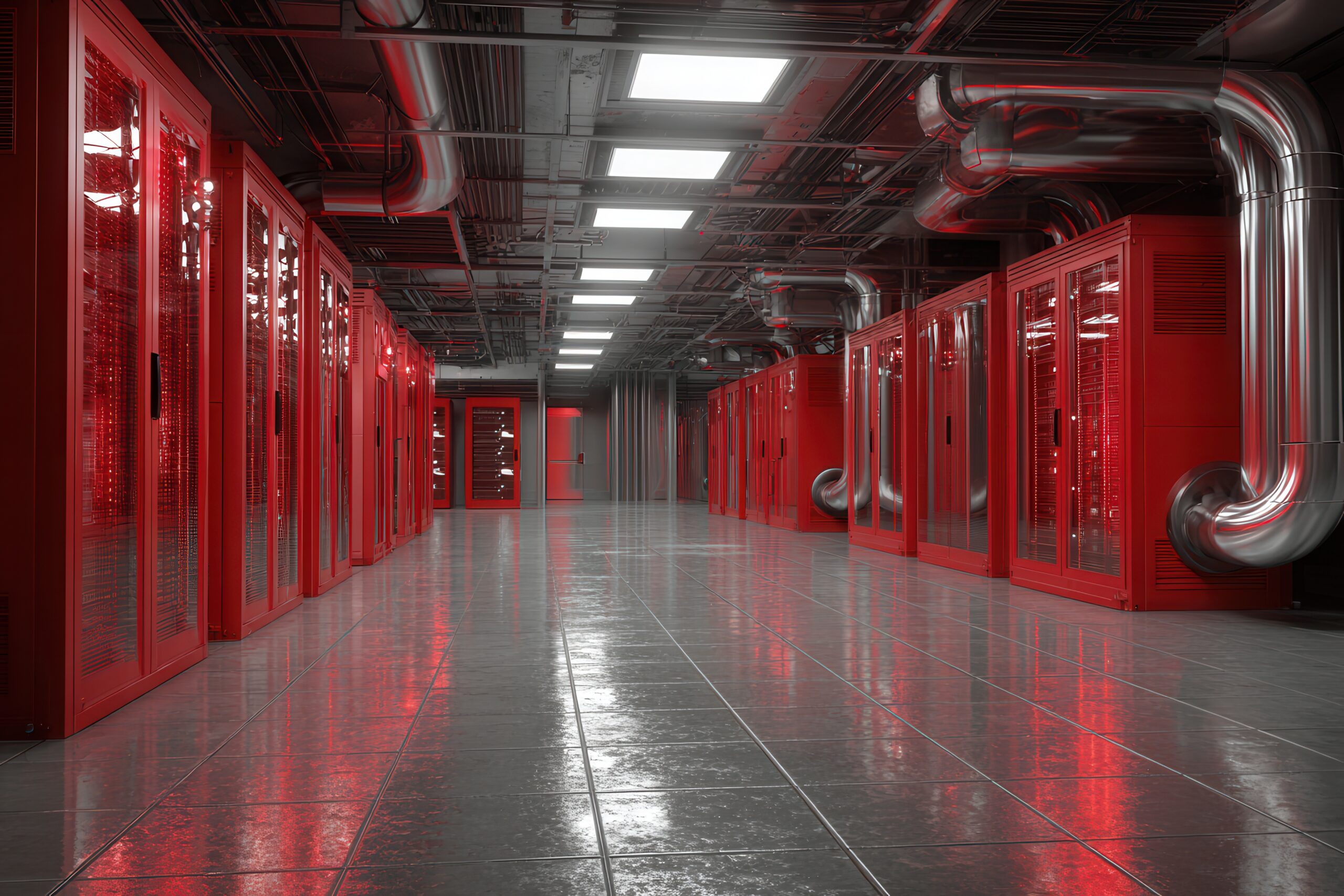
Piping Technology and Products helps data center operators deliver modern cooling in tight footprints.

Cooling Piping Modernization

Engineering High-Density Cooling Solutions for Brownfield Facilities. Modernizing a legacy data center is an exercise in precision. By utilizing custom-engineered pipe supports and space-saving expansion joints, operators can transition to high-density cooling without the massive capital expenditure of a new build. Whether you are dealing with restricted overhead heights or the structural limitations of an aging building, the proper hardware makes the difference between a failed installation and a future-proofed facility.

Technical Specifications: Pipe Supports for Infrastructure Retrofits

To help you identify the most effective hardware for navigating restricted footprints and structural constraints, the following chart compares specialized pipe supports used in high-density modernization projects.

Support Type Best Use Case Modernization Advantage Load Capacity
Variable and Constant Effort Spring Hangers Systems with vertical thermal movement. Prevents stress on aging structural ceilings by “floating” the load. High (Customizable)
Low-Profile Pipe Shoes Tight clearances under raised floors or near ceilings. Minimizes the pipe run’s “vertical footprint” to save headspace. Medium to High
Slide Bearings (PTFE) Long horizontal runs require lateral movement. Reduces friction and lateral force on existing building anchors. Very High
Seismic Bracing Facilities in high-risk zones or upper floor levels. Keeps new, heavy cooling lines stable during tremors without bulky frames. High
Vibration Isolation Hangers Near high-capacity pumps or CRAC units. Prevents mechanical “hum” from interfering with sensitive server disk drives. Low to Medium

Technical Specifications: Expansion Joints for Modernization

To help you select the right hardware for a tight legacy footprint, use the chart below to compare the performance of various expansion solutions.

Feature Metallic Bellows (Axial) Pressure Balanced Elbow Rubber Expansion Joint
Primary Movement Axial (Compression/Ext.) Multi-plane (Low Thrust) Vibration & Noise
Space Efficiency Excellent (Compact) Moderate (Large footprint) Good (Short face-to-face)
Pressure Rating High (Up to 1000+ PSI) High (Varies by design) Low to Moderate
Temp. Range -320°F to 1500°F+ -320°F to 800°F+ -40°F to 250°F
Best Use Case Direct runs in tight corridors Near pumps/sensitive anchors Chilled water return lines
Modernization Edge Maximize rack space Protects aging structures Isolates mechanical hum


Pro Tip: In a legacy facility, the elbow pressure-balanced expansion joint is a game-changer because it absorbs movement without transferring the pressure thrust to the existing building anchors, which may not have been designed for modern high-pressure cooling loops.

Bridging the Gap Between Legacy Structures and Future Cooling with PT&P

At Piping Technology & Products (PT&P), we specialize in the “impossible” fit. We understand that in a legacy data center, every inch saved is an inch available for revenue-generating server racks.

We offer a vertically integrated approach to brownfield modernizations:

  • On-Site 3D Laser Scanning: We can map your existing facility to design supports that fit the first time.
  • Custom Fabrication: From cryogenic supports for advanced cooling to heavy-duty spring hangers, we manufacture everything in-house to meet your specific spatial constraints.
  • Emergency Turnaround: We understand that downtime is not an option for data centers; our rapid-response manufacturing keeps your modernization project on schedule.

Contact Piping Technology & Products to discuss custom-engineered support solutions for your next data center retrofit.

Read More

Advanced Pipe Support Design in Midstream Operations

January 22, 2026

Piping Technology and Products (PT&P) offers constant supports, slide plates, and specialized cryogenic solutions to eliminate friction and ensure pipeline integrity.

In midstream operations, spanning thousands of miles of pipelines, pump stations, and terminals, the smallest component can become the single point of failure. Pipeline integrity engineers and reliability specialists know that thermal expansion and vibration are constant threats. Standard off-the-shelf hangers often fall short in these environments, leading to excessive stress on welds and flanges. Advanced pipe support design is about dynamic load management that adapts to the shifting pressures and temperatures inherent in oil and gas transport.

The Hidden Cost of Friction: PT&P Slide Plates & PTFE Guides

Standard pipe supports can inadvertently become “anchor points” that invite disaster. When a pipeline undergoes thermal cycling, it must move; if a support restricts that movement through high friction, the stress is redirected into the pipe wall. This leads to creep, excessive bending, and accelerated corrosion at the contact points.

The Solution: PT&P uses 2-element slide plate assemblies (incorporating PTFE, Graphite, or 25% Glass-Filled Teflon) to reduce the coefficient of friction to as low as 0.05-0.1. By transitioning from metal-on-metal contact to these specialized slides, operators virtually eliminate the lateral forces that cause localized wall thinning and structural fatigue.

Real World Example: PTFE Slide Plates Designed for Major Gas Pipeline Project in Africa

Beyond the Standard Hanger: PT&P Constant and Variable Spring Supports

For midstream assets dealing with cryogenic temperatures at LNG terminals or high-heat pump stations, standard is no longer an option. As a pipe moves vertically due to thermal expansion, a rigid support would either lose contact with the pipe or exert excessive force on it.

The Solution: PT&P constant supports are engineered with a specialized cam-and-spring mechanism that maintains a uniform supporting force throughout the full range of vertical travel (up to 20 inches). In areas with less severe movement, our variable-spring supports use a pre-compressed coil to allow movement while maintaining a load within a specific percentage of the operating requirement, ensuring the pipeline remains balanced despite massive thermal shifts.

Real World Example: U-Type Constant Spring Supports Designed for an LNG Plant in Canada

The Predictive Power of Analysis: PT&P Finite Element Analysis (FEA)

Precision support selection is impossible without pipe stress analysis. By using finite element analysis (FEA) and dynamic thermal studies, PT&P identifies high-stress “hot spots” before a single support is installed. This foundational service allows us to simulate how a pipeline segment will react to environmental loads, slug flow, and thermal surges.

The Solution: Our engineering team conducts CAESAR II modeling to identify where rigid anchors should be replaced with PT&P-engineered guides or snubbers. Our teams believe that data-driven design is the best safeguard against unplanned shutdowns. 

Real World Example: Finite Element Analysis Used in Design Process for 4,000 supports for LNG Facility in Texas

Critical Asset Protection: The Value of Advanced Pipe Support Design in Midstream Operations

Engineering the Movement of Energy. At PT&P, we provide more than just hardware; we offer a total reliability ecosystem. Our value lies in our ability to combine in-house pipe stress analysis with the manufacturing of custom-engineered supports. This closed-loop approach ensures that the supports arriving at your site are exactly what your system’s physics require. With a 50-year history of solving the industry’s toughest vibration and thermal expansion challenges, we are the partner of choice for operators who view integrity as a non-negotiable asset.

Learn how advanced pipe support design and pipe stress analysis prevent midstream failures. Explore PT&P’s constant support, slide plates, and specialized cryogenic solutions designed to eliminate friction and ensure pipeline integrity and performance.

Is your pipeline’s support system working against your reliability goals? Even a minor leak can reveal a stress concentration. Contact our engineering team today for a comprehensive pipe stress analysis or a site audit of your existing supports.


Read More

The Shift to Liquid Cooling: Powering High-Density Data Centers for the AI Era

January 16, 2026

Pipe Guides from Piping Technology & Products help secure data center servers.

The Shift to Liquid Cooling: Powering High-Density Data Centers for the AI Era

As artificial intelligence (AI) and machine learning (ML) move from niche research projects to the backbone of global enterprise, the data center is facing a thermal crisis. Traditional air cooling, once the industry standard, is reaching its physical limits. Standard racks that previously pulled 10kW to 15kW are being replaced by high-density GPU clusters demanding 50kW, 100kW, or more. To manage this heat flux, the industry is making a decisive shift toward liquid cooling—a medium roughly 3,000 times more effective at heat transfer than air.

Engineering Reliable Piping Systems in Data Center Cooling Systems

The transition to liquid cooling is not a one-size-fits-all migration. It involves sophisticated piping networks that must deliver coolant with surgical precision. Whether a data center facility is being retrofitted or built from the ground up, understanding the three primary cooling methods—and the mechanical infrastructure required to support them—is important for operational reliability.

1. Direct-to-Chip (Cold Plate) Cooling

Direct-to-chip cooling involves circulating coolant through a cold plate sitting directly on the CPU or GPU. This method captures up to 80% of server heat, enabling extreme rack densities while using existing room-level air cooling for the remaining components.

  • The Piping Requirement: High vibration resistance and leakproof integrity.
  • Piping Technology Solution: Custom Engineered Expansion Joints.
  • The Value: In a direct-to-chip setup, the thermal expansion of the secondary loop piping can put immense stress on delicate manifold connections. US Bellows (a PT&P company) provides precision-engineered expansion joints that absorb thermal expansion and mechanical vibration, preventing stress from being transmitted to server racks or sensitive fluid connectors.
2. Immersion Cooling (Single and Two-Phase)

In immersion cooling, servers are completely submerged in a thermally conductive, dielectric fluid. This eliminates the need for fans and allows for the highest power densities available today, as the fluid makes contact with every heat-generating component.

  • The Piping Requirement: Compatibility with dielectric fluids and heavy-load structural support.
  • Piping Technology Solution: Constant and Variable Spring Hangers.
  • The Value: Immersion tanks are incredibly heavy when filled with dielectric fluid. The external piping delivering coolant to these tanks must be perfectly supported to prevent nozzle loading. PT&P’s constant- and variable-spring hangers ensure that, as the system reaches operating temperature, the weight of the piping remains balanced, protecting the integrity of the immersion tanks.
3. Rear-Door Heat Exchangers (RDHx)

An RDHx is a specialized radiator attached to the back of a server rack. Liquid circulates through the door, cooling the exhaust air before it ever enters the data center floor, often allowing for “chilled water-free” operation in certain climates.

  • The Piping Requirement: Precision routing and flexible support in tight spaces.
  • Piping Technology Solution: Pre-Insulated Pipe Supports (Hot/Cold Shoes).
  • The Value: To maintain efficiency and prevent condensation in the white space (main operational area where IT gear sits), coolant lines must be adequately insulated. PT&P’s pre-insulated cold shoes provide a thermal break between the piping and the support structure. This prevents energy loss and eliminates the risk of sweating pipes, which can be catastrophic near high-voltage server equipment.

Why Liquid Cooling is the Ultimate High-Density Solution

The shift to liquid cooling isn’t just about managing heat; it’s about Total Cost of Ownership (TCO) and sustainability within the modern data center.

  • Energy Efficiency: Liquid cooling reduces the Power Usage Effectiveness (PUE) by significantly lowering the energy required for fans and CRAC units.
  • Performance: By keeping GPUs at a lower, stable temperature, data centers can prevent thermal throttling, ensuring AI workloads run at peak performance.
  • Space Optimization: Higher density means more computing power in a smaller physical footprint, deferring the need for costly facility expansions.

PT&P Is Your Partner in Data Center Infrastructure

At Piping Technology and Products, we recognize that a data center’s liquid cooling loop is only as reliable as its weakest support or joint. We position ourselves as the ideal partner for data center operators by offering a unified engineering approach. By manufacturing both the supports that hold the system and the expansion joints that give it flexibility, we provide a holistic mechanical solution that withstands the 24/7/365 demands of critical infrastructure. Our expertise ensures a seamless, safe transition to high-density AI cooling.

Scale Your Data Center Capacity and Optimize for High-Performance Computing

If you are designing a new build or retrofitting an existing center for high-density racks, our engineers are ready to help you optimize your piping support and flexibility: schedule time with one of our engineers to discuss your long-term liquid-cooling strategy.


Read More

Hold-Down Clamps for a Waste Disposal Facility

January 13, 2026

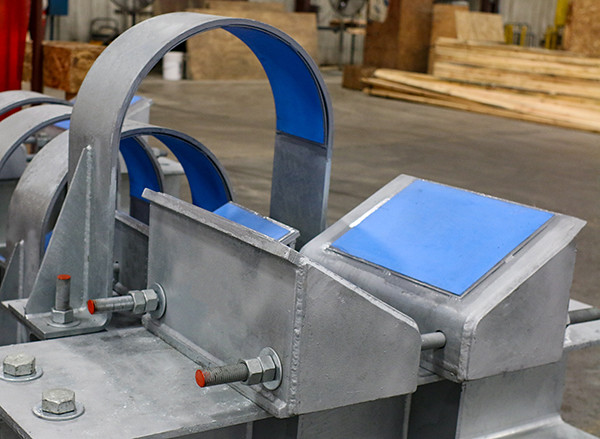
Hold-Down Pipe Clamps for a 20" Pipeline at a Waste Disposal Facility

These custom-fabricated hold-down pipe clamps assemblies are designed to effectively control vibration and protect piping systems in demanding industrial environments. Each assembly incorporates wedges made from 25% glass-filled PTFE, which absorb vibration while providing a protective buffer between the steel pipe and the pipe support.

Flow-induced and acoustic-induced vibration are common challenges in Power, Solar, Biofuels, and Chemical plants, as well as in pipelines located near rotating equipment such as reciprocating pumps and compressors. Left unchecked, vibration can lead to cracking, premature failure, and costly unplanned shutdowns. Our engineered solutions help mitigate these risks in both onshore and offshore applications.

The assemblies shown are custom-designed for pipe sizes up to 20″ in diameter and operating temperatures up to 200°F. Adjustable to accommodate a range of elevations from Top of Steel (T.O.S.) to Bottom of Pipe (B.O.P.), each unit measures 21″ wide × 26″ long × 23″ high and has been proven to reduce vibration to acceptable levels.

Fabricated from A36 carbon steel plate with A307 grade all-threaded rods, all components are hot-dip galvanized for corrosion resistance. Every assembly undergoes a thorough quality control inspection prior to shipment—ensuring reliable performance you can trust.

Read More

Managing Vibration in Chilled Water Loops: The Role of Pipe Guides and Anchors in Data Center Cold Piping

January 9, 2026

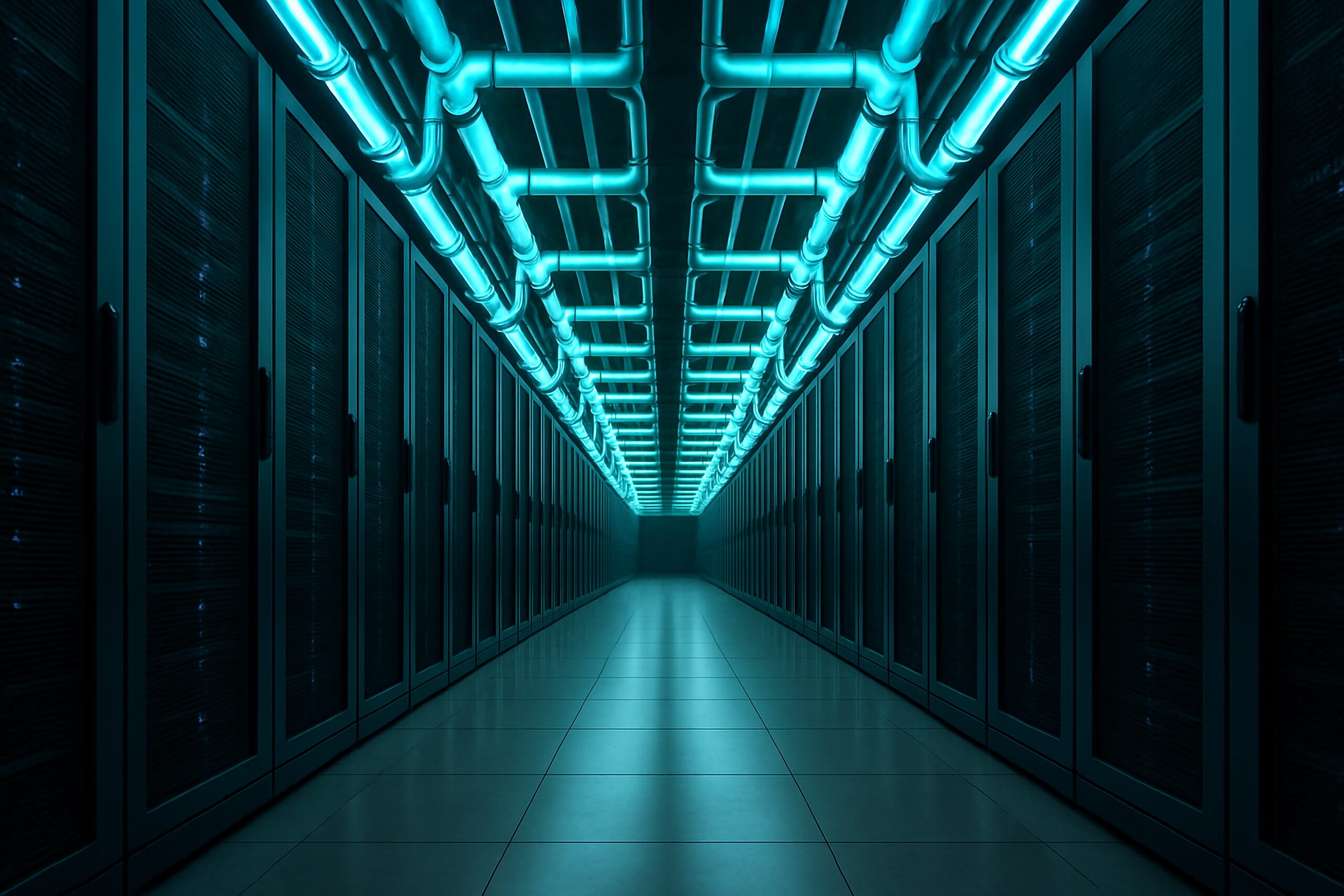
Liquid cooling in a futuristic data center hallway with glowing blue pipes.

In a data center, chilled water loops are the lifelines that prevent servers from overheating. However, these systems are often subject to intense mechanical stress. Pump-induced vibration and hydraulic shock can lead to resonant frequencies that, if left unchecked, cause metal fatigue, joint failure, and catastrophic leaks.

Achieving mechanical stability requires more than heavy-duty piping; it requires strategically applying pipe guides and anchors to create a controlled environment for fluid transport.

The Critical Role of Anchors and Guides

To stabilize a chilled water loop, engineers must balance two opposing forces: the need for the pipe to move during thermal cycles and the need to keep it rigid against mechanical vibration.

1. Strategic Anchoring: The “Zero Point.”

An anchor is a rigid point of attachment that prevents all translation and rotation of the pipe. In vibration management, anchors are used to:

  • Isolate High-Vibration Equipment: By placing anchors near pumps or chillers, you prevent mechanical energy from “traveling” down the entire piping run.
  • Protect Sensitive Connections: Anchors shield delicate server-row connections from the thrust forces generated by water hammer or pressure surges.

2. Pipe Guides: Directing the Energy

While anchors stop movement, pipe guides are designed to permit axial movement while restricting lateral (side-to-side) and vertical displacement.

  • Preventing Buckling: When a pipe expands, it wants to bow. Guides ensure that expansion is directed straight into expansion joints rather than into the building’s structural steel.
  • Damping Resonance: Properly spaced guides change the natural frequency of the piping system, “breaking up” long spans where vibration could otherwise build into destructive oscillations.

Technical Specifications: Pipe Supports for Stability

To help you identify the most effective hardware for navigating restrictive footprints and structural limitations, the following chart compares the specialized pipe supports used in high-density modernization projects.

Support Type

Best Use Case Mechanical Advantage

Vibration Control

Main Anchor Pump discharge and header turns. Fixes the pipe in all 6 degrees of freedom. Maximum (Stops all transit)
Spider Guide Long straight runs in corridors. Maintains alignment during thermal growth. High (Prevents lateral whip)
Slide Bearings Heavy pipes on secondary steel. Eliminates friction-induced vibration. Medium (Damps surface noise)
Seismic Bracing Critical infrastructure zones. Absorbs sudden high-impact energy. High (Protects against surges)

Protecting Data Center Uptime: A Vibration Control FAQ

How do you stop vibration in chilled water piping? 

To stop vibration, you must install a combination of vibration-isolation hangers near the source and rigid pipe anchors to isolate the equipment. Additionally, installing pipe guides at calculated intervals raises the system’s natural frequency, preventing the buildup of harmonic resonance that can lead to fatigue failure.

Why are pipe guides necessary for expansion joints? 

Pipe guides are essential because they ensure that thermal expansion is directed straight into the expansion joint. Without proper guiding, the pipe may buckle or “squirm” under pressure, causing the expansion joint to fail and the pipe to exert dangerous lateral forces on its supports.

What is the difference between a pipe hanger and a pipe guide? 

A pipe hanger primarily supports the dead weight of the pipe (vertical load), whereas a pipe guide restricts lateral and rotational movement while allowing for axial growth. In high-vibration chilled-water loops, hangers provide support, but guides offer the stability needed to prevent oscillation.

How does improper anchoring affect data center uptime?

Improper anchoring allows mechanical vibration to reach pipe joints and gaskets, leading to “nuisance leaks” or full pipe bursts. In a data center, even a minor leak in a chilled-water loop can cause humidity spikes or direct water damage to server racks, resulting in costly downtime.

Ensure Your System Stability Today

Don’t wait for a hairline fracture to realize your piping system is under-supported. Secure your facility’s future by auditing your vibration control strategy now. Reach out to our engineering team to review your current piping layout.

Piping Technology Data Center Projects Around the Globe
Global map showing the location of Piping Technology & Products’ data center projects, from retrofits to new builds.

How PT&P Adds Value: Improving PUE through Stability

At Piping Technology & Products, we understand that data center efficiency—measured by Power Usage Effectiveness (PUE)—is directly impacted by the health of your cooling loop. Vibrating pipes create turbulence, which forces your pumps to work harder and consume more energy. 

By using our custom-engineered pipe guides and anchors, you minimize mechanical friction and fluid turbulence, allowing your cooling system to operate at peak hydraulic efficiency. Our solutions don’t just protect your hardware; they lower your energy overhead by ensuring that every watt spent on cooling is delivered with precision.

Partner with PT&P to engineer a high-stability, high-efficiency cooling loop for your facility.

Read More

Seismic Bracing, U-Loop Expansion Joints, Pipe Guides, Anchors and Supports: Protecting Data Centers in High-Risk Zones

January 2, 2026

Work with Piping Technology and Products to address differential settlement for your data center in high risk seismic zones.

For data centers and large-scale industrial facilities, downtime is not an option. In high-risk seismic zones, the integrity of cooling and utility piping determines whether a facility survives a geological event or suffers catastrophic failure. Ensuring 100% uptime requires a proactive engineering strategy that moves beyond standard thermal management to address the violent, multidirectional forces of an earthquake.

Drawing on advanced engineering case studies—including massive battery plants with requirements mirroring modern data centers—this post explores how nested U-Loop expansion joints, engineered supports, and rigorous compliance strategies ensure disaster recovery readiness.

The Compliance Imperative: Engineering for Differential Settlement

In seismically active regions, the threat isn’t just the ground shaking; it is the unpredictable movement of the structures themselves. A major compliance challenge in large-scale facilities is “differential settlement,” where one building or section of a facility sinks or settles at a different rate than another.

To remain compliant and operational, piping systems must be designed to absorb these extreme displacements without rupturing. Disaster recovery planning starts at the design phase with pipe stress analysis. For critical infrastructure, it is essential and, many times, a requirement to have Licensed Professional Engineers (PE) stamp both the stress analysis and the design of the expansion joints. This ensures the system can handle specific seismic loads and movements, as well as regular thermal movements.

The Seismic Solution: Nested U-Loop Expansion Joints

Traditional piping solutions often struggle when space is at a premium. While flexible metal hoses are a standard option when space is unavailable, they typically have lower spring rates. They are better suited to smaller, more frequent movements than engineered expansion joints.

To address the dual challenges of seismic resilience and spatial constraints, US Bellows’ breakthrough solution is the first to build U-loops with expansion joints.  Here are some of the advantages and value this custom solution offers data center operators:


  • Hybrid Design: This “industry-first” design integrates bellows directly into the loop structure. This provides superior flexibility to handle both thermal expansion and seismic movement simultaneously without compromising the pipe’s pressure rating.


  • Space Optimization: For crowded jobsites like data centers, “nesting” larger-diameter loops within smaller ones consolidates the hardware. This prevents expansion joints from colliding during seismic shaking, a critical factor in maintaining system integrity.


  • Seismic “Dog Legs”: A dog leg expansion joint is a pipe assembly, typically used in piping systems to compensate for movement from thermal changes or seismic events, using one ninety-degree bends and two straight pipe sections to form an “L” shape. For areas requiring extreme versatility, specialized dog leg expansion joints can handle both lateral and axial movement in both vertical and horizontal orientations.

Pipe Anchors, Guides, and Supports: The Backbone of Cold Piping

Even the most robust expansion joint will fail if the surrounding pipe is not adequately supported. A comprehensive seismic strategy must include durable bracing and specialized guides.


  1. Reducing Anchor Load with Tie Rods. In high-pressure systems, the force exerted on anchors can be massive. For buildings and data centers, this can be a big issue, as the ability to install anchors is limited and costly, especially when the piping is suspended from the roof. Modern U-Loop expansion joints use tie rods to absorb pressure forces, significantly reducing the need for numerous heavy anchors throughout the facility.
  2. Trapeze Supports and PTFE Liners. Proper support design prevents reactive issues during commissioning and operation. In recent large-scale applications, engineers have used trapeze-hanging supports to support the piping and aid in managing axial and lateral growth. Furthermore, using clamps lined with PTFE (Teflon) allows for necessary sliding motion during compression while keeping the pipe guided and stiffened. This prevents angulation—a condition where pipes become misaligned and may lead to buckling instability—ensuring the system remains stable even during pressure surges.
  3. Protection Against Excessive Cycling. To minimize the risk of failure during an event, design criteria should include flow liners and covers. These additions protect the bellows from flow media and external damage, ensuring the joint remains functional in the event of a disaster or upset.
  4. Pre-Insulated Pipe Supports. Foundational thermal management is critical before addressing complex seismic challenges. In the case study of the 4-million-square-foot battery plant, Piping Technology and Products was initially engaged to provide insulated supports and beam clamps before the U-Loop solution was developed. These pre-insulated supports are vital for preventing thermal bridging and maintaining energy efficiency, serving as the first line of defense in a comprehensive piping support strategy.

Custom-Engineered Solutions: Where Agility Meets Uptime

Protecting data centers in high-risk zones requires a shift from reactive fixes to proactive, engineered solutions. By using nested U-loops that accommodate differential settlement and employing PE-stamped pipe stress analyses, facility managers can ensure their cooling systems remain earthquake-ready.

.Whether retrofitting an existing data center or designing a new 2.3-square-mile campus, the goal remains the same: ensuring that when the ground moves, your operations do not.

Why Piping Technology and Products & US Bellows?

The Value of a Single Source for Performance and Quality. When disaster recovery is the goal, fragmentation is the enemy. US Bellows and Piping Technology and Products (PT&P) offer custom-engineered solutions that eliminate the gaps between support design and expansion joint manufacturing, including:


  • Integrated Engineering: We don’t just manufacture parts; we evaluate and validate the entire cold piping system and cooling infrastructure. We provide PE-stamped pipe stress analysis for the entire pipeline, ensuring that the expansion joints and the supports (anchors, guides, and beam clamps) work together.


  • Rapid Scale & Delivery: For a  4-million-square-foot facility, our team shipped over 200 expansion joints, ranging in diameter from 4 to 36 inches. US Bellows completed 69 shipments comprising 400 distinct products and over 6,000 units in five months. Our ability to translate construction schedules into manufacturing efficiency is unmatched.


  • Field-Proven Problem Solving: When commissioning issues arise, we respond. When a client faced pipe angulation issues caused by third-party couplings, our field service team deployed immediately and engineered a custom PTFE-lined clamp solution that resolved the problem without requiring pipe removal.

Common Questions: Seismic Compliance & U-Loop Expansion Joints

Prepare your data center for seismic activity with a custom solution from US Bellows , like nested U -Loops.

Q: Why use a “Nested” U-Loop instead of standard loops for data centers? 

A: Data centers are often space-constrained. Nesting consolidates U-loops into a single location, reducing the piping footprint. Crucially, it prevents the loops from colliding during seismic shaking, which protects system integrity.

Q: How does this system handle differential settlement? 

A: Unlike standard thermal expansion joints, these U-Loops are specifically engineered to accommodate differential settlement, where different sections of a building settle or sink at different rates, ensuring the pipe does not break or separate during these shifts.

Q: Can these systems replace flexible metal hoses? 

A: Yes. While flex hoses are common, U-Loops with integrated bellows offer a higher spring rate, greater robustness during seismic events, and reduced risk of failure from excessive cycling.

Prepare Your Data Center’s Cooling  Infrastructure for the Unpredictable

Don’t wait for a seismic event to test your cooling system’s integrity. Whether you are retrofitting an existing data center or designing a new campus, rely on the team that has engineered solutions globally for some of the largest data center projects in the world—partner with US Bellows and PT&P for end-to-end seismic resilience. Schedule a pipe stress analysis to identify the right solutions for cold piping operations in high-seismic-risk zones.

Read More
Top