Beyond the Mega Rule: Using Pipe Stress Analysis for a Competitive Midstream Turnaround Advantage

February 27, 2026

Leverage pipe stress analysis from Piping Technology to ensure compliance and minimize maintenance shutdown time for agig midstream assets.

The midstream sector is currently navigating one of the most demanding regulatory shifts in decades. With the full implementation of the Pipeline and Hazardous Materials Safety Administration-PHMSA Mega Rule (Gas Transmission Integrity Management), the mandate has shifted from periodic check-ins to a rigorous, data-driven requirement for traceable, verifiable, and complete (TVC) records.

For regulatory compliance managers and maintenance directors, the pressure is about the physical reality of aging infrastructure. How do you demonstrate that a 40-year-old pipeline segment remains fitness-for-service (FFS) under modern safety factors?

The answer lies in transforming pipe stress analysis (PSA) from a new project requirement into a strategic maintenance tool. By integrating sophisticated analysis with turnaround (TAR) scheduling, operators can move from reactive scrambling to proactive asset life extension.

The Compliance Mandate: More Than Just a Box to Tick

The regulatory landscape, governed by PHMSA, ASME B31.8, and API 579-1, now demands greater granularity in assessing the structural integrity of pipeline systems. The Mega Rule specifically targets moderate-consequence areas (MCAs) and requires operators to reconfirm the maximum allowable operating pressure (MAOP).

If your records are incomplete or your assets are aging, you face a choice:

  1. Lower the operating pressure (reducing throughput and revenue).
  2. Pressure tests the line (costly and carries a risk of failure).
  3. Conduct a comprehensive engineering analysis to prove integrity.

For many, the third option is the most viable, but it requires more than a visual inspection. It requires a deep dive into the physics of the piping system.

The Predictive Power of Pipe Stress Analysis

PSA is often pigeonholed as a design-phase activity. However, in the context of the Mega Rule, PSA is a powerful diagnostic tool for existing assets. By creating a digital twin or a computational model of an aging system, engineers can simulate thermal expansion, seismic loads, and weight distribution.

Applying PSA to aging infrastructure allows you to:

  • Identify Hidden Fatigue: Spot areas where original design limits are being exceeded due to decades of settlement or operational changes.
  • Justify Continued Service: Use API 579-1 Fitness-for-Service standards to demonstrate to regulators that a slightly corroded or deformed section remains structurally sound, avoiding unnecessary replacements.
  • Prioritize Repairs: Instead of replacing an entire mile of pipe, PSA can pinpoint the specific supports or expansion joints that absorb the most stress, enabling a targeted repair strategy.

Integrating Planning and Parts: The PT&P Standard

The greatest risk to any turnaround or shutdown is the discovery item: the unexpected crack or failed support found only after the system is depressurized. These discoveries lead to schedule creep, emergency shipping costs, and extended downtime.

Piping Technology and Products (PT&P) bridges the gap between engineering analysis and the physical work scope. Our approach integrates the analytical results directly into your turnaround planning services.

1. The Comprehensive Review

Before the shutdown begins, PT&P engineers perform a site walkdown and stress analysis. We don’t just look for rust; we look for “bottleneck” stresses. This results in a Prioritized Replacement List baked into your TAR schedule months in advance.

2. Engineering the Fix

If the analysis flags a worn guide support, a bottomed-out spring hanger, or a fatigued expansion joint, our teams know the solution isn’t just any part; it’s the correct part. We ensure that every replacement is engineered to handle the current operating loads, not just the loads estimated back in 1980.

3. Quick-Delivery Solutions

The integrated part of our strategy culminates in our fabrication shop. PT&P specializes in pre-engineered and quick-delivery pipe supports. Because we own the engineering data from the analysis phase, we can begin fabrication of custom supports or expansion joints to be delivered just in time for your shutdown window.

Example: If a stress analysis conducted three months before a TAR reveals that a critical T-joint is overstressed due to a failed constant-core hanger, PT&P can design, build, and ship the replacement hanger so it arrives on the day the cranes are on-site. No waiting, no emergency surcharges.

The Bottom Line: Reducing Risk and Cost

The convergence of the Mega Rule and aging infrastructure doesn’t have to be a financial drain. By leveraging pipe stress analysis as the foundation of your turnaround strategy, you achieve three critical outcomes:

  • Regulatory Peace of Mind: You have the engineering documentation (TVC records) to prove your assets meet PHMSA and ASME standards.
  • Minimized Downtime: By identifying repair needs before the shutdown, you eliminate the “discovery and delay” cycle that plagues most midstream TARs.
  • Capital Efficiency: Spend your maintenance budget where it matters most. PSA prevents you from replacing healthy pipes while ensuring that high-stress components are renewed.

In the era of the Mega Rule, compliance is less of an administrative hurdle and more of an engineering discipline.

Pipeline Compliance for Midstream Operations: FAQ 

To help Regulatory Managers and Asset Integrity teams quickly find answers regarding the evolving PHMSA landscape, we have compiled this high-authority brief on the intersection of engineering and compliance.

How does Pipe Stress Analysis support PHMSA Mega Rule compliance?

PSA provides the traceable, verifiable, and complete (TVC) engineering data required by the Mega Rule (49 CFR 192.624). While traditional inspections identify visible damage, PSA validates the structural integrity of aging assets by simulating current operational loads against original design limits. It allows operators to justify Maximum Allowable Operating Pressure (MAOP) and provides the technical basis for Fitness-for-Service (FFS) assessments under API 579-1.

Can Pipe Stress Analysis prevent Turnaround (TAR) delays?

Yes. By performing pipe stress analysis during the pre-shutdown planning phase, operators can identify stress bottlenecks and failing supports before the system is opened. This transforms discovery items into planned workscopes, enabling the prefabrication and delivery of custom pipe supports and expansion joints before the TAR begins, effectively eliminating mid-shutdown engineering delays.

What are the benefits of Integrating Pipe Stress Analysis with Asset Management?

Integrating PSA into a broader integrity program shifts the strategy from reactive maintenance to predictive life extension. Key benefits include:

  • Targeted Remediation: Replacing only the components under high stress rather than entire pipeline segments.
  • Regulatory Justification: Providing documented engineering proof of safety factors for aging infrastructure.
  • Operational Optimization: Understanding how thermal expansion and vibration impact the longevity of connected equipment like compressors and pumps.

How does PT&P reduce regulatory risk?

PT&P turnaround planning services bridge the gap between problem identification and solution implementation. By conducting site walkdowns and stress modeling months before a shutdown, PT&P ensures that all required hardware, such as variable-spring hangers, constant-core supports, or expansion joints, is engineered to modern codes and delivered just-in-time. This ensures that repairs meet the most stringent PHMSA and ASME B31.8 safety standards without extending the shutdown window.

At PT&P, we provide a single-source solution that unites high-end stress engineering with world-class manufacturing. Unlike firms that only provide a report or vendors that only sell parts, we deliver a closed-loop system: we analyze the problem, engineer the solution, and manufacture the hardware. This integrated approach ensures that your aging assets remain compliant, and your turnarounds stay on schedule.

Turn your compliance requirements into a streamlined maintenance strategy. Contact our field services team to schedule a preliminary system walkdown or to discuss how our pipe stress analysis can improve and streamline your next turnaround.

Read More
Custom Constant Supports: Heavy-Duty Solutions for High Loads and Limited Clearance

February 13, 2026

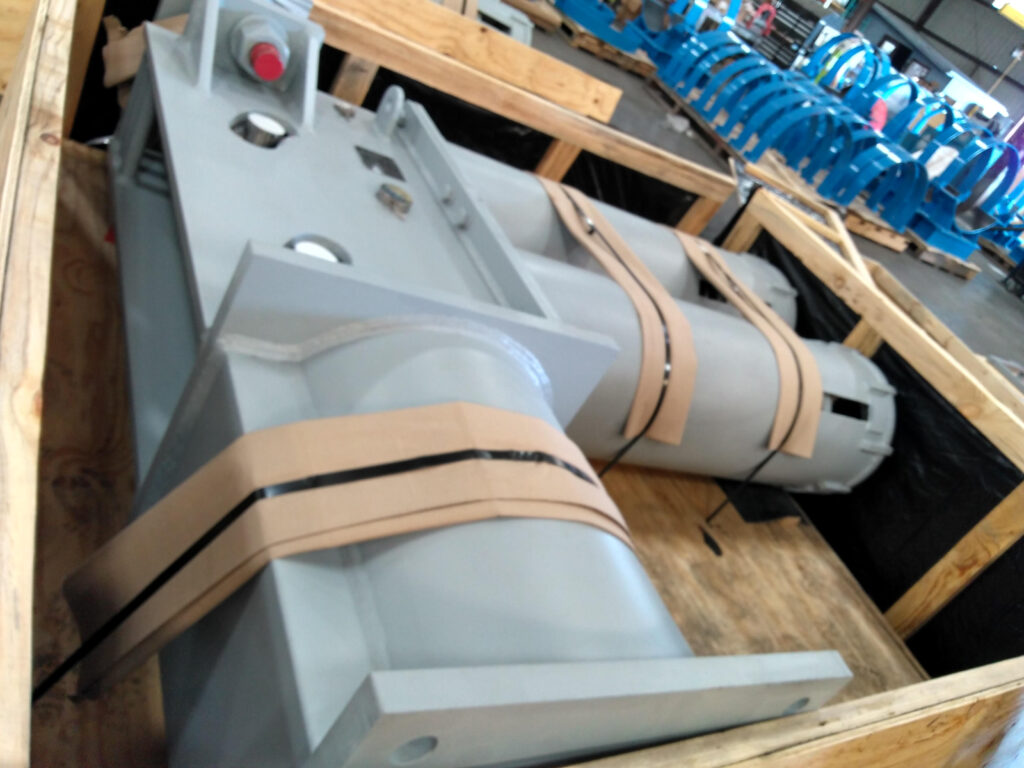
Constant spring supports are vital for large vessels and piping that move due to thermal expansion. When standard parts don’t fit into the available space or fail to hold the weight, our custom engineered pipe supports step in. We stabilize heavy loads to stop them from damaging your critical equipment.


Constant spring support


What is a Constant Spring Support?

A constant spring support exerts a uniform supporting force on a pipe or vessel throughout its vertical travel. Unlike variable springs, the load remains the same even as the pipe moves up or down. These supports are essential for:

  • Supporting Massive Loads: Handling weights that exceed 100,000 pounds.
  • Accommodating Load/High Travel combination: Managing movement of 4 to 6.5 inches due to thermal expansion coupled with 104,000 to 143,000 lbs of load.
  • preventing Stress Transfer: Ensuring no extra weight is transferred to the piping or vessel walls during operation.

Dangote constant support


Piping Technology & Products manufactures constant supports to exact needs. We use durable materials and custom designs. Whether you need a standard PT&P 200  F-Type or a heavy-duty 200 C-Type, we build supports that fit your specific load, travel, and space limits.


Constant spring support front

Case Study: Custom Supports for the Dangote Refinery

For the Dangote Refinery in Nigeria—the world’s largest single-train refinery—Piping Technology and Products supplied custom constant supports. This facility processes 650,000 barrels of crude oil per day and requires substantial infrastructure.

The Challenge: The customer needed supports for huge vessels. The loads were extreme (up to 143,000 pounds), and the space was tight. Standard catalog items could not handle the weight or fit in the narrow gaps,.

The Solution: Our engineering team created three unique designs to solve these problems:

  • Side-by-Side F-Types: We paired two supports to lift 104,000 pounds with 6.5 inches of travel. This used a custom, heavy-duty linkage.
  • Stacked Assemblies: For narrow spaces, we placed supports on top of each other. This design accommodated 110,000 pounds of load with 4 inches of travel.
  • High-Capacity C-Types: We built single-can supports capable of holding 143,000 pounds, a feat few competitors can match.

The Result: We delivered 200 F-Type and 200 C-Type supports. They fit perfectly and accommodated thermal expansion, keeping the refinery’s vessels safe.


Constant spring support back

Designed for Refinery Demands

In the oil and gas sector, safety and uptime are key. Piping systems and vessels face harsh conditions:

  • High Heat: Metal expands when hot. Supports must move with it.
  • High Loads: Equipment is massive. Supports must not fail under the load.
  • Space Limitations: Refineries are crowded. Supports must fit in limited space.


Read More

Pipe Anchors, Guides, and Utility Skid Design for High-Purity Semiconductor Manufacturing

February 13, 2026


Technician examining a high tech microchip in a clean room

In the race to reach “First Wafer,” the timeline for facility construction is the ultimate bottleneck. Modern semiconductor manufacturing relies on complex utility skids: pre-fabricated, modular systems that deliver everything from ultra-pure water (UPW) to specialty chemical blends.

While the process chemistry gets all the glory, the mechanical integrity of these skids depends on a disciplined application of pipe anchors and guides. In a high-density fab environment, these components are the difference between a system that scales and one that fails under its own internal pressures.

The Role of Directional Control in High-Density Fabs

As nodes shrink, the fab footprint becomes more crowded. Utility corridors are packed with piping that must navigate tight turns while carrying fluids at varying temperatures.

  • Pipe Guides: These act as the rails for your system. In semiconductor skids, guides channel thermal expansion into expansion loops or offsets rather than deflecting it laterally into sensitive process equipment.
  • The Semiconductor Edge: Without precision guiding, a lateral shift of just a few millimeters in a utility line can trigger a domino effect, placing stress on high-purity plastic piping (such as PFA or PVDF) that is prone to creep and stress cracking.

Protecting the Tool: Anchor Loading and Vibration Isolation

The most expensive asset in any fab is the lithography or etching tool. These tools are hyper-sensitive to external forces.

Anchors serve as the “dead-end” for mechanical forces. By strategically placing anchors at the interface between the utility skid and the fab’s main sub-fab piping, engineers can:

  1. Isolate Loads: Ensure that the weight and hydraulic thrust of the utility lines are absorbed by the building’s structural steel, not the tool’s connection points.
  2. Seismic Protection: In regions such as Taiwan and Silicon Valley, seismic anchors are mandatory. They ensure that during an event, the utility skid moves in tandem with the building, preventing catastrophic joint shear.

Accelerating Tool Hook-Up with Modular Support Systems

The primary value of a utility skid in semiconductor manufacturing is speed. A plug-and-play skid enables faster tool hook-up (THU) phases.

By integrating engineered anchors and guides directly into the skid design during the BIM (Building Information Modeling) phase, manufacturers can avoid the challenges that plague traditional construction. When anchors are pre-calculated for the fab’s specific flow rates and temperatures, the risk of a startup leak or vibration-induced failure drops to near zero.

Engineering Insight: In modular skid design, using low-friction slide plates with guides can reduce the total footprint of a piping run by 15-20%, allowing more utility lines in the same overhead space.

The Tool Hook-Up (THU) Checklist: Pipe Support Integrity

Before a utility skid is commissioned and the first chemicals flow, ensure your piping infrastructure meets these semiconductor-grade standards.

1. Alignment & Clearance

  • [ ] Thermal Clearance: Verify that pipe guides have the specified radial clearance to allow for axial movement without binding.
  • [ ] Travel Range: For variable spring hangers, ensure the “travel stop” pins have been removed, and the indicator is within the operating range.
  • [ ] Tool Interface: Confirm that the final connection to the process tool is neutral, meaning the piping is supported independently and isn’t pulling on the tool’s intake flange.

2. Hardware & Material Compliance

  • [ ] Dissimilar Metals: Check that stainless steel piping is isolated from carbon steel supports using rubber inserts or specialized coatings to prevent galvanic corrosion.
  • [ ] Cleanroom Protocol: Ensure all support hardware has been wiped down and is free of oils, lubricants, or shop dust that could compromise cleanroom ISO ratings.
  • [ ] Fastener Torque: Verify that anchor bolts are torqued to design specifications and marked with “torque seal” or witness marks for visual inspection.

3. Dynamic & Seismic Stability

  • [ ] Seismic Bracing: Ensure all anchors are rigid and that lateral braces are installed according to the seismic zone requirements for the specific fab location.
  • [ ] Vibration Dampening: Inspect vibration isolation pads for proper compression; ensure they are not “bottomed out” under the weight of the filled pipe.
  • [ ] Expansion Loops: Verify that there are no temporary shipping restraints or “purlin clips” obstructing the movement of expansion loops or bellows.

Reliability by Design with Piping Technology and Products

In the semiconductor industry, just ‘good enough’ piping can lead to million-dollar downtime. By treating pipe anchors and guides as critical components of the utility skid architecture, fabrication facilities can achieve the mechanical stability required for 24/7 high-volume manufacturing.

Where Nanometers Meet Megatons. Your process requires nanometer-level precision, but your utility infrastructure must withstand massive mechanical forces. At PT&P, we bridge that gap. We focus on delivering engineered reliability. By integrating pipe stress analysis with our custom-manufactured anchors and guides, we ensure your utility skids protect your yield, your equipment, and your timeline.

Stop Stressing Your Skids. Don’t let thermal expansion or vibration compromise your cleanroom’s stability. Partner with the engineers who understand the high-stakes world of semiconductor infrastructure. Schedule a pipe stress analysis for your next tool hook-up.

Read More

Managing Flow-Induced Vibration in Power Generation Piping

February 5, 2026

Vibration in power plant piping can be dangerous, Piping Technology designs and makes a full suite of vibration control products

In power plants, piping systems are often subjected to extreme internal forces. From steam hammer events during turbine trips to the constant turbulence of high-pressure flow, flow-induced vibration (FIV) is a persistent threat. Without a system of pipe supports and guides, this unseen energy can lead to catastrophic metal fatigue, cracked welds, and unplanned outages. At Piping Technology & Products, we understand that controlling vibration isn’t just about making the plant quieter; it’s about protecting the structural integrity of your most critical assets.

The Silent Threat of Fatigue Failure

Vibration in power piping is rarely a one-time event; it is a cumulative stressor. When a pipe vibrates at its resonant frequency, it undergoes millions of stress cycles in a matter of days. This phenomenon, known as high-cycle fatigue, can cause even the thickest stainless steel to fail without warning.

Identifying the Vibrational Danger Zones

The risk of vibration is highest where flow direction or velocity changes abruptly. Engineers must pay close attention to:

  • Bypass Lines: Where high-pressure steam is throttled, creating intense turbulence.
  • Safety Relief Valve (SRV) Headers: Which experience massive reaction forces during discharge.
  • Long Horizontal Runs: Which are susceptible to low-frequency swaying if not properly guided.

Strategic Hardware for Vibration Management

To successfully manage FIV, a support system must dampen movement without restricting the pipe’s required thermal expansion. Rigidly pinning a pipe in place may stop the pipe from shaking, but it will cause the pipe to buckle once it reaches operating temperature.

The Role of Sway Braces and Snubbers

The solution lies in specialized hardware. Sway braces provide a preloaded spring force that acts as a shock absorber, opposing vibrational forces while still allowing the pipe to expand thermally. For high-energy events like seismic activity or steam hammer, hydraulic or mechanical snubbers act like a car’s seatbelt, allowing slow movement but locking instantly during a sudden surge. By integrating these with precision-engineered pipe guides, PT&P ensures your piping stays on its designated path and absorbs the energy that would otherwise destroy your welds.

50 Years in the Trenches:  Delivering Field-Tested Stability to Global Power Plants

When you partner with Piping Technology & Products, you aren’t just buying hardware; you are gaining 50 years of field-tested engineering expertise. We are the only manufacturer that provides a vertically integrated solution—from initial stress analysis and custom support design to 24/7 manufacturing capabilities required for emergency outages. Our supports are built to exceed ASME B31.1 and B31.3 standards, ensuring that your power plant remains safe, compliant, and operational.

FAQ: Mastering Vibration Control in High-Energy Piping

How do I distinguish between thermal movement and harmful vibration?

A: Thermal movement is slow and predictable, occurring as the plant heats up or cools down. Vibration is a rapid, repetitive oscillation. If you see “shimmering” or hear a constant humming or rattling at a support point, you likely have an FIV issue that requires a sway brace or snubber.

Can I just weld the pipe to a beam to stop the shaking?

A: No. Rigidly anchoring a pipe to prevent vibration often creates “thermal bind.” When the pipe expands, a rigid weld can crack or cause the pipe to bow, damaging connected equipment such as pumps or turbines.

What is the difference between a sway brace and a sway strut?

A: A sway strut is a rigid member that prevents movement in a specific direction entirely. A sway brace contains a spring that provides a cushioned movement, absorbing vibration while still allowing slow thermal expansion.

Vibration Could Be Putting Your Uptime at Risk

A rattling pipe is a system screaming for help. Whether you are dealing with a legacy plant facing new vibration issues or designing a high-efficiency facility from the ground up, our team is ready to help you engineer a solution that balances flexibility with absolute control. We’ve seen every vibration challenge you can think of; let us help you solve yours. PT&P is ready to assist.

Contact the PT&P Engineering Team to schedule a consultation and secure your facility’s future.


Read More
Top