Choosing the right pipe supports is crucial for the lifespan and safety of any piping system. It’s not just about holding pipes in place; it’s about managing stress, accommodating movement, and protecting your entire infrastructure. Before you make a purchase, consider these five critical factors to ensure you’re making the best decision for your project.
The Foundation of Reliability: Understanding Your Needs
Every piping system is unique, and so are its support requirements. A thorough understanding of your specific application will help you select the most appropriate supports.
What Environmental Conditions Will the Supports Face?
The environment in which your pipe supports operate significantly impacts their material and design. Consider factors such as:
- Temperature: Extreme temperatures, both hot and cold, can affect material properties. Supports in high-temperature environments need to withstand thermal expansion and contraction, while those in cold environments must resist embrittlement.
- Corrosion: Will the supports be exposed to moisture, chemicals, or saltwater? Corrosion-resistant materials, such as stainless steel, or specialized coatings, may be necessary.
- Vibration and Seismic Activity: In areas prone to earthquakes or systems with high vibration, specialized seismic bracing or vibration dampeners are essential to prevent damage and ensure stability.
Load and Stress Management: Supporting More Than Just Weight
Pipe supports do more than bear the static weight of the pipe and its contents. They play a critical role in managing various forces and stresses within the system.
- Weight of the Pipe and Contents: This is the most obvious factor, but it’s essential to calculate accurately, including the weight of insulation, valves, and other components.
- Thermal Expansion and Contraction: As pipes heat up and cool down, they expand and contract. Supports must allow for this movement without inducing excessive stress on the pipe or the support itself. This is where options such as constant or variable spring supports come into play.
- Dynamic Loads: Consider forces from fluid surges, water hammer, or external impacts. These dynamic loads require supports designed for robust performance.
Material Matters: Choosing for Durability and Performance
The material of your pipe support directly influences its lifespan and effectiveness.
- Carbon Steel: A common and cost-effective choice for many applications, especially in moderate environments.
- Stainless Steel: Offers superior corrosion resistance, ideal for harsh environments or where cleanliness is paramount.
- Alloys: For extreme temperatures or highly corrosive media, specialized alloys might be required.
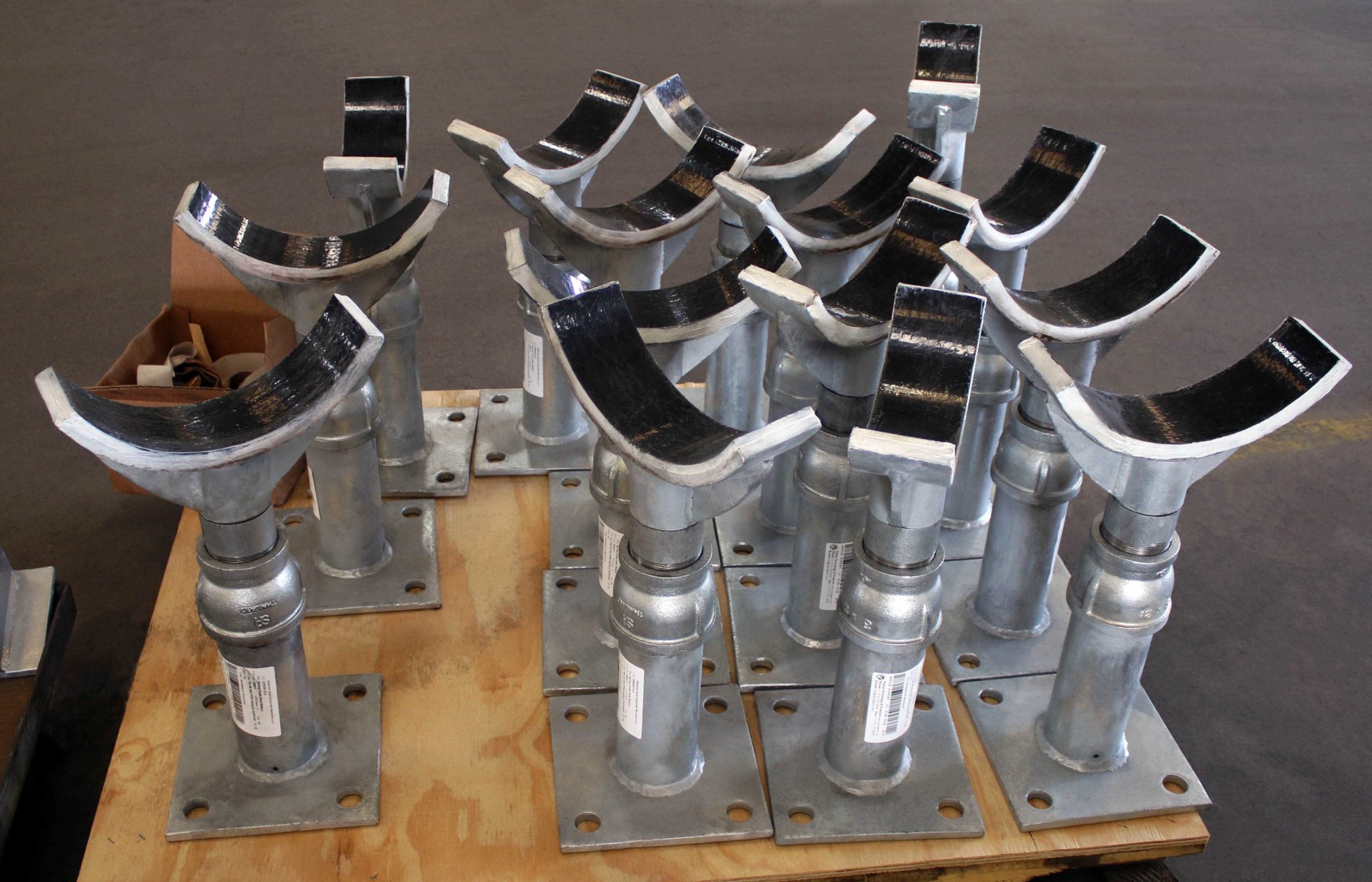
- Non-Metallic Materials: In specific applications, such as those requiring electrical isolation or chemical resistance, non-metallic materials, such as FRP (fiber-reinforced plastic), may be suitable.
Installation and Accessibility: Practical Considerations
Even the best pipe support is ineffective if it cannot be installed correctly or maintained easily.
- Ease of Installation: Consider the complexity of installation and whether specialized tools or skills are required. Supports designed for quick and straightforward installation can save time and labor costs.
- Accessibility for Maintenance: Ensure that supports are placed in locations that allow for easy inspection, adjustment, or replacement without significant disruption to the system.
- Space Constraints: In confined spaces, compact designs or specialized supports may be necessary.
Cost-Effectiveness and Long-Term Value
While the initial purchase price is a factor, it’s crucial to consider the long-term value and total cost of ownership.
- Life Cycle Costs: Factor in installation, maintenance, and potential replacement costs over the system’s lifespan. A slightly more expensive but durable support might be more cost-effective in the long run.
- Compliance and Standards: Ensure the supports comply with relevant industry standards and regulations to avoid potential penalties or safety issues.
- Supplier Reputation and Support: Choose a reputable manufacturer that offers high-quality products, technical support, and reliable delivery.
By carefully evaluating these five factors, you can make informed decisions that result in a reliable, cost-effective piping system.
Choose PT&P to Protect Your Critical Infrastructure
At Piping Technology and Products, our comprehensive in-house capabilities, from design and engineering to advanced manufacturing and testing, ensure that every support is precisely tailored to your unique operational demands. We eliminate guesswork by providing solutions that anticipate complex challenges, such as thermal expansion, seismic activity, and corrosive environments.
When you’re ready to improve your piping system with the right supports, contact Piping Technology and Products for a custom quote and discover how our engineered solutions can drive the safety of your infrastructure.